Skip to content


When planning a move, one of the most misunderstood topics is moving insurance vs valuation coverage explained. Many people assume their belongings are fully protected, only to find out too late that coverage is limited. Whether you’re planning local moves or long-distance relocation, understanding how protection works can save you from expensive surprises.
The reality is that your moving company does not automatically provide traditional insurance. Instead, they offer different levels of protection under federal guidelines. Knowing the difference between valuation coverage and actual insurance policies helps you make smarter decisions, especially when transporting high value items or sensitive personal property.
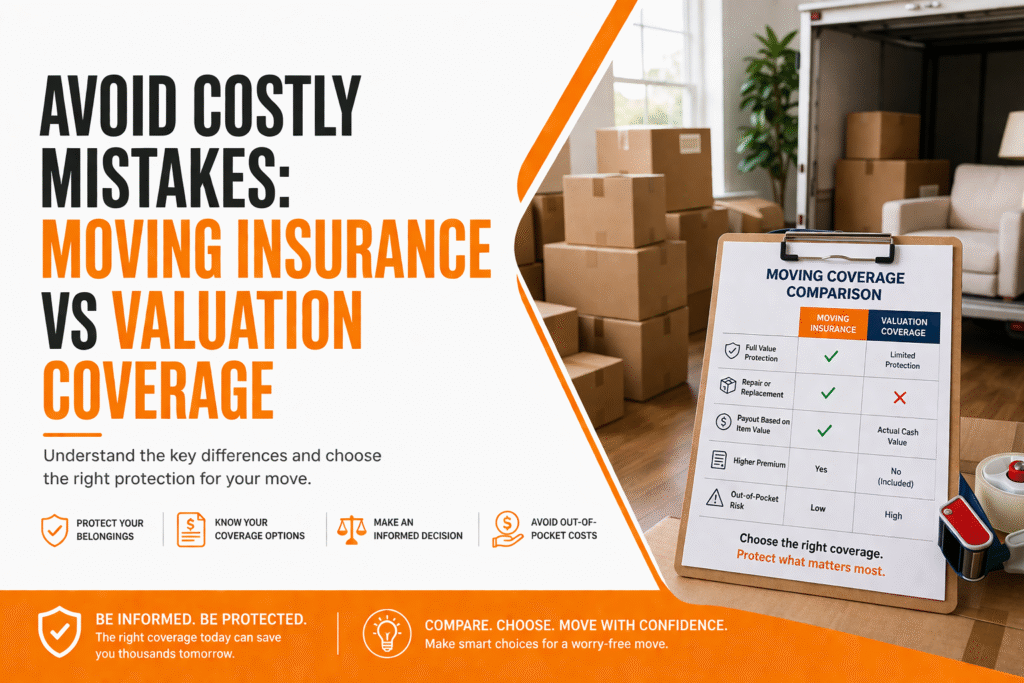
Moving Insurance vs Valuation Coverage Comparison
| Feature | Moving Insurance | Valuation Coverage |
| Type | Third-party policy from an insurance company | Carrier liability protection |
| Coverage Level | Full coverage for lost or damaged items | Limited or full value protection |
| Cost | Based on cost of moving insurance | Included or additional charge |
| Claims Process | Handled by insurer | Handled by moving company |
| Best For | High value items | Basic protection needs |
What Is Moving Valuation Coverage and Why It Matters
Understanding moving valuation is essential before signing any bill of lading. This document outlines the mover’s liability, not an insurance policy. Many people reviewing choose movers overlook this detail and assume complete protection. In reality, valuation determines how much the mover will pay if items are lost or damaged.
There are different valuation options available, and each affects how your claim is handled. Without proper understanding, you risk underinsuring your belongings. For example, fragile furniture or electronics may not receive full replacement coverage unless you select the right plan. This is where professional guidance becomes important to avoid gaps in protection.
Released Value Protection Explained
Released value protection is the most basic level offered by movers. It comes at no extra cost but only covers items at a minimal rate per pound. This option rarely reflects actual value, making it risky for valuable possessions.
Full Value Protection Moving Insurance: What You Actually Get
Full value protection moving insurance provides a higher level of accountability. Unlike basic coverage, the mover is responsible for repair, replacement, or cash compensation for damaged items. When reviewing local moving services, this option is often recommended for households with valuable belongings.
However, this protection typically comes with an additional charge based on the declared value of your shipment. It is not the same as third-party insurance, but it significantly improves coverage compared to released value protection. If you want better peace of mind, this is often the minimum level professionals suggest.
When Full Value Protection Makes Sense
This option is ideal when transporting electronics, antiques, or expensive furniture. It ensures compensation aligns more closely with real value instead of weight-based estimates.
Moving Insurance: How It Differs from Valuation Coverage
The key difference in moving insurance vs valuation coverage explained lies in who assumes risk. Valuation insurance is simply liability coverage from the mover, while actual insurance comes from a third-party insurance company. If you’re moving across states or dealing with expensive items, relying solely on valuation may not be enough.
Many customers also ask, does home insurance cover moving. In most cases, homeowners insurance offers limited protection during transit, and exclusions often apply. According to the Consumer Financial Protection Bureau, policies vary widely and rarely replace full transit coverage. That is why separate moving insurance is often recommended.
Key Risk Differences
Valuation limits payout based on weight or declared value, while insurance covers actual loss. This distinction becomes critical when expensive items are involved.
Cost of Moving Insurance vs Valuation Coverage
The cost of moving insurance depends on the value of your belongings, distance, and risk factors. Unlike valuation, which may be included or charged as an additional charge, insurance policies are priced separately. When reviewing expenses, many clients also check moving costs to understand the full financial picture.
Valuation coverage typically costs less upfront, but it may not provide enough compensation if items are lost or damaged. Insurance, while more expensive, offers broader protection. According to UCLA housing research on relocation risks UCLA Anderson School, unexpected losses during moves often exceed initial cost estimates, making proper coverage essential.
Budget vs Protection Tradeoff
Choosing cheaper coverage may save money upfront but increases financial risk. Insurance balances cost with stronger protection.
Why DIY Moving Protection Often Fails
Many people assume renting a moving truck and relying on homeowners insurance is enough. In reality, DIY moves expose you to more risk because there is no structured liability insurance from a professional moving company. Without expertise, packing mistakes lead to more damaged items.
Improper handling of high value items is one of the biggest reasons DIY fails. Without professional packing and coverage planning, even minor damage can result in major losses. The EPA also highlights the importance of safe handling practices for household goods EPA waste reduction guide, which indirectly supports the need for professional handling during relocation.
Hidden Risks in DIY Moves
Lack of proper packing, no liability coverage, and unclear claim processes make DIY moving financially risky.
Signs You Need Professional Moving Protection
If you are moving fragile furniture, electronics, or artwork, you need more than basic valuation coverage. People planning move high-value items should always consider upgraded protection. Complex moves involving stairs, long distances, or tight schedules also increase the risk of damage.
Another sign is when your inventory includes irreplaceable or sentimental items. In such cases, relying on minimal coverage is a gamble. Professional movers help you select the right valuation option or insurance plan to protect your belongings properly. This ensures you are not left covering losses out of pocket.
Why Choose Professional Movers for Protection Planning
Working with experts ensures you understand every detail of moving insurance vs valuation coverage explained los angeles. Professional movers guide you through coverage options, helping you avoid underinsurance. They also ensure your bill of lading accurately reflects your chosen protection level.
In addition, professionals use proper packing techniques to reduce risk before coverage even applies. This proactive approach minimizes the chance of filing claims. Reliable movers also coordinate with insurance providers when needed, giving you a smoother experience from start to finish.
FAQs About Moving Valuation Coverage
1. What is the difference between moving insurance and valuation coverage?
Valuation coverage is liability from the mover, while moving insurance is a separate policy from an insurer. Insurance offers broader protection, while valuation limits payouts based on weight or declared value.
2. Does homeowners insurance cover moving?
Homeowners insurance may provide limited coverage during transit, but it often excludes damage caused by movers. It is not a replacement for proper moving insurance or full value protection.
3. What is full value protection in moving?
Full value protection requires the mover to repair, replace, or compensate for damaged items. It offers significantly better protection than basic coverage.
4. Is valuation coverage enough?
For low-value items, it may be sufficient. However, for high value items, it often falls short and leaves you financially exposed.
5. How much does moving insurance cost?
The cost of moving insurance depends on the value of your belongings and coverage level. It typically ranges from a small percentage of the total declared value.
6. What is released value protection?
Released value protection is basic coverage included at no cost. It compensates based on weight, not actual value, making it the least protective option.
7. When should I buy moving insurance?
You should consider insurance when transporting valuable, fragile, or irreplaceable items. It is especially important for long-distance or high-risk moves.
Take the Next Step Toward a Safer Move
Understanding moving insurance vs valuation coverage explained helps you avoid costly mistakes and protect your belongings properly. Whether you are planning a simple move or handling valuable assets, choosing the right protection is not optional. It directly impacts your financial safety during relocation.
If you want clarity, proper coverage, and a stress-free experience, working with professionals like Eagle Star Moving ensures nothing is overlooked. Take the next step by scheduling a consultation or requesting a quote to secure the right protection for your move.