Skip to content


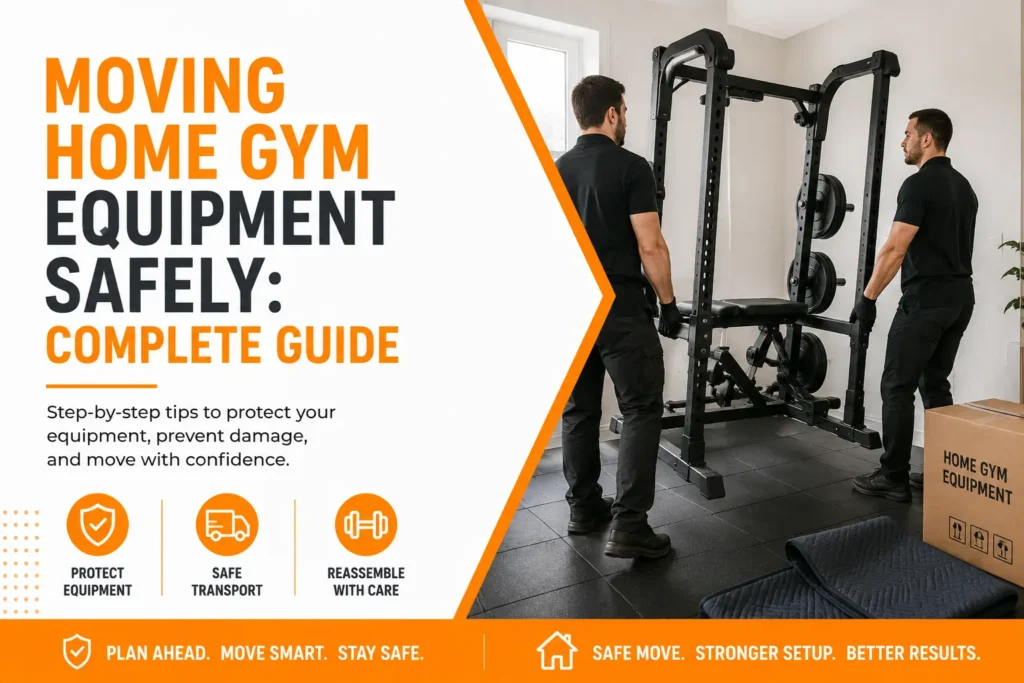
Moving home gym equipment safely takes more planning than most people expect. Treadmills, squat racks, cable machines, benches, and free weights are difficult to handle because of their size, uneven weight distribution, and delicate electronic parts. Many homeowners underestimate the risks involved in a gym equipment move, which often leads to damaged floors, broken machines, strained backs, or scratched walls during the moving process.
If you are preparing for a residential relocation or redesigning your workout area, understanding how to move gym equipment correctly can save time, money, and stress. From choosing the right moving supplies to using furniture dollies, hand trucks, and protective wrapping, every step matters. For larger systems and heavy machinery, professional equipment movers are often the safest option.
Why Home Gym Equipment Is Difficult to Move
Most homeowners assume fitness machines can be handled like ordinary household items, but that is rarely true. A treadmill or Smith machine may look compact, yet the internal weight balance makes lifting dangerous without proper planning. During an equipment move, even a small mistake can crack flooring, damage door frames, or injure the movers. This becomes even more risky when navigating stairs, tight hallways, or empty spaces inside apartment buildings and garages. If you are planning a larger relocation, reviewing this moving checklist can help organize the process.
Another challenge is protecting expensive fitness equipment during transportation. Many modern machines include screens, wiring, hydraulic systems, and moving components that shift during transit. Without the right moving boxes, straps, and padding, valuable machines can suffer internal damage that is not immediately visible. People often search for how to move exercise equipment online and attempt a DIY move, only to discover the machine no longer functions correctly after reassembly.
How to Prepare Before Moving Gym Equipment
Preparation is the most important part of moving home gym equipment safely. Start by measuring doorways, stairwells, elevators, and truck access areas. Large fitness systems often require partial disassembly before they can leave the room safely. Taking photos of wiring and bolt placement helps simplify reassembly later. It is also smart to organize screws and hardware in labeled bags so nothing gets lost during the moving process.
Next, gather the correct moving supplies. You may need ratchet straps, appliance sliders, blankets, shrink wrap, and sturdy boxes for accessories and removable parts. Machines with glass screens or electronics should receive extra padding. Professional machinery movers often use custom protection techniques because standard household packing materials may not fully protect expensive fitness systems during transport.
Disconnect Electronics and Power Sources
Before touching any machine, unplug all electronics and remove batteries if applicable. Treadmills, rowing machines, and smart bikes often contain sensitive internal systems that can be damaged by sudden movement. Allow machines to cool completely after use before packing. This reduces the risk of moisture buildup or overheating damage during transportation.
How to Pack Dumbbells and Weight Plates Correctly
Many injuries during a gym equipment move happen because free weights are packed incorrectly. People overload weak containers or attempt to carry too much at once. Understanding how to pack dumbbells for moving starts with limiting weight per box. Use small cardboard boxes or reinforced containers rather than large bins. Heavy loads placed into oversized boxes can break through the bottom during lifting.
When learning how to pack weights for moving, it is important to distribute weight evenly and prevent metal pieces from shifting during transit. Wrap plates and dumbbells individually with towels or padding to reduce friction and scratches. Use tape to secure box seams and clearly label heavy containers. Experienced professional movers often recommend keeping each box below manageable lifting limits to avoid injury and truck loading problems.
Best Tools for Moving Heavy Exercise Equipment
Using the proper equipment dramatically reduces the risk of accidents. Large cardio machines and strength systems should never be dragged across flooring because the concentrated pressure can crack tile, dent hardwood, or tear carpet. Instead, movers rely on furniture dollies, lifting straps, and dollies or hand trucks to move oversized equipment safely. These tools help distribute weight and improve balance during transport.
For commercial grade systems or oversized home gyms, heavy duty ramps and loading equipment may also be required. Some machines weigh several hundred pounds and cannot be safely managed by two inexperienced people. In these situations, trained machinery movers understand how to secure weight loads, protect property, and avoid injuries. Homeowners relocating multiple specialty items may also benefit from reading about high-value items before moving day.
Protect Floors and Walls During Transport
Protective coverings matter just as much as lifting equipment. Plywood sheets, sliders, and corner guards help prevent damage while moving large machines through narrow areas. One accidental bump from a treadmill or weight rack can leave expensive repair damage behind. Professionals plan pathways carefully before moving a single item.
Common DIY Mistakes During a Gym Equipment Move
One of the biggest mistakes homeowners make is underestimating the weight of fitness equipment. Even a simple adjustable bench can become difficult to maneuver in narrow hallways. Attempting to lift awkward machines without planning often causes back injuries or damaged property. People also fail to secure removable parts, which leads to bolts, cables, and attachments shifting inside the truck during transportation.
Another common issue involves improper truck loading. Heavy fitness equipment should never sit loosely inside a moving vehicle. During sudden stops, machines can slide into other belongings or collapse onto surrounding items. Professional moving services understand load balancing and secure placement techniques that protect both the high value inventory and the moving crew. If your relocation involves multiple bulky items, this guide on packing bulky items offers additional preparation tips.
When Professional Movers Are the Better Choice
Not every move should be handled alone. Large cable systems, elliptical machines, and multi station gyms often require partial dismantling and advanced lifting techniques. If your equipment includes electrical components, glass displays, or welded frames, hiring professional movers may prevent expensive damage. This is especially important for upstairs apartments, narrow staircases, and long-distance moves where equipment shifts repeatedly during transit.
Professional equipment movers also help reduce liability and physical strain. Many homeowners do not realize how risky moving heavy machinery can be until an injury occurs. Specialized moving teams understand safe lifting practices, truck loading procedures, and equipment protection methods. Homeowners comparing options can learn more about selecting qualified movers through this guide on choosing movers.
According to research from the Princeton University Environmental Health and Safety guide, improper lifting remains one of the leading causes of preventable moving injuries. Professional movers use team lifting techniques and mechanical assistance to reduce stress on the body during difficult relocations.
Signs Professional Service Is Needed
- Your equipment weighs more than two people can safely lift
- The move includes stairs, elevators, or narrow hallways
- The machine contains electrical or digital components
- You own commercial grade or custom built equipment
- The relocation involves long-distance transportation
- You need temporary storage for equipment and accessories
- The move includes expensive or fragile fitness systems
- You are concerned about floor or wall damage
These situations often require trained machinery moving specialists with the right tools and transportation methods. Attempting complex moves without experience usually creates more cost than hiring qualified movers from the beginning.
Safety Standards and Expert Recommendations
Safe lifting practices are important during any relocation involving heavy machinery and oversized equipment. The Occupational Safety and Health Administration recommends using proper lifting methods and avoiding unsafe manual handling techniques when moving large objects. You can review official lifting safety information through the OSHA ergonomics resource.
The American Moving and Storage Association also recommends hiring licensed moving professionals for oversized specialty items that require advanced handling and transportation expertise.
Why Choose Eagle Star Moving
Eagle Star Moving understands the challenges involved in transporting home gym equipment, oversized machines, and fragile fitness systems. Their trained moving crews use heavy duty equipment, protective materials, and secure transportation methods designed for difficult relocations. Whether you are moving a compact home gym or a complete fitness setup, experienced movers help reduce risk throughout the entire moving process.
The company also provides flexible packing services, secure transportation, and specialty moving support for valuable items. Clients benefit from organized planning, careful loading procedures, and experienced teams who understand how to protect both equipment and property during relocation.
Frequently Asked Questions
How to pack gym equipment for moving?
Start by disassembling removable parts and labeling all hardware. Use padding, shrink wrap, and sturdy boxes for accessories. Secure electronics carefully and avoid placing heavy parts inside oversized containers. Proper packing prevents scratches, shifting, and internal machine damage during transport.
How to move gym equipment safely?
Use lifting straps, furniture dollies, and protective floor coverings whenever possible. Plan the route before moving large items and never drag equipment across flooring. For oversized machines or stair moves, professional equipment movers are usually the safest choice.
How to pack dumbbells for moving?
Wrap dumbbells individually with towels or padding and place them inside reinforced cardboard boxes. Keep each box at a manageable weight to avoid injuries or broken containers. Seal the bottom securely with heavy packing tape before transport.
How to move exercise equipment upstairs?
Moving equipment upstairs requires controlled lifting techniques, spotters, and the right tools. Machines should often be partially disassembled before stair transport. Because of the injury risk involved, many homeowners hire professional movers for multi-level relocations.
How to pack weights for moving?
Separate weight plates by size and avoid overloading containers. Use compact boxes with reinforced bottoms and wrap plates to prevent metal contact damage. Clearly label heavy boxes so movers understand the weight before lifting.
What qualifies as a high-value equipment move?
A high-value equipment move typically involves expensive fitness systems, commercial machines, or specialty equipment requiring advanced handling. These moves often need custom protection, secure loading methods, and experienced movers familiar with specialty transportation procedures.
Can movers relocate complete home gyms?
Yes. Experienced moving services can relocate full gym setups including treadmills, racks, cable systems, benches, and free weights. Professional teams often handle disassembly, transportation, and reassembly for safer and faster relocation.
Schedule Professional Help for Your Gym Equipment Move
Moving home gym equipment safely requires more than strength alone. Proper planning, safe lifting methods, quality packing materials, and the right transportation tools all play an important role in protecting your equipment and your property. While smaller items may be manageable alone, large fitness systems and heavy machinery often require experienced handling to avoid injuries and expensive damage.
If your upcoming move includes specialty fitness equipment, oversized weights, or delicate electronics, Eagle Star Moving can help simplify the process with professional support and organized moving solutions. To discuss your relocation needs or schedule service, contact the team through their contact page or request a free estimate.