Skip to content


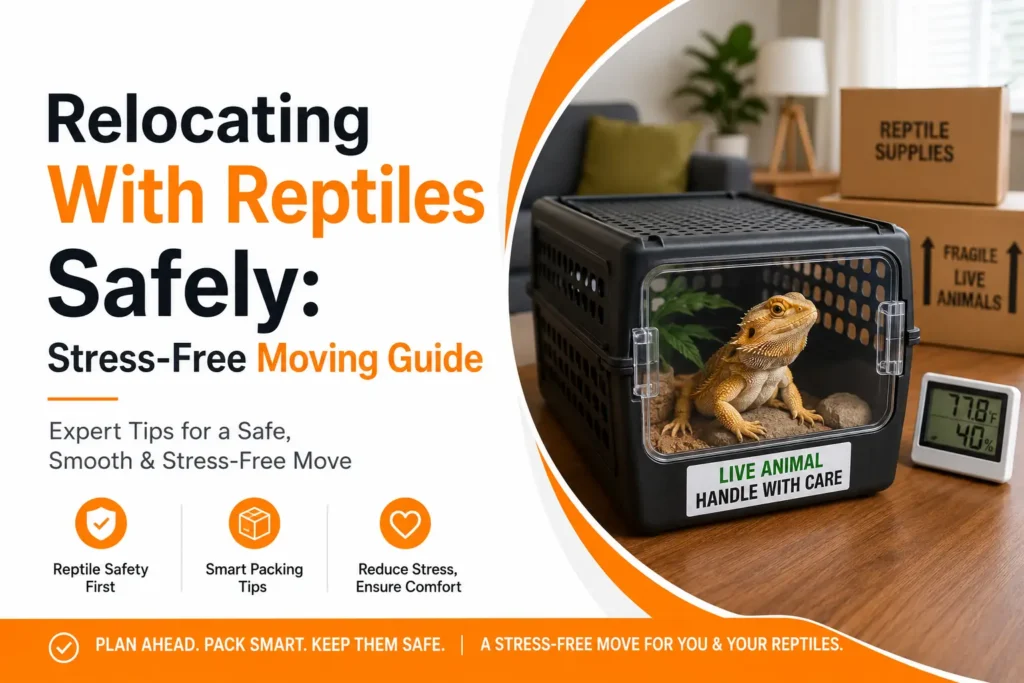
Relocating with reptiles safely requires careful planning, controlled environments, and the right handling techniques to ensure your pets stay calm and protected during transit. Unlike cats or dogs, reptiles and amphibians are highly sensitive to temperature shifts, vibration, and stress, making reptile travel a specialized part of any move. Whether you own a bearded dragon, gecko, or snake, proper preparation is the difference between a safe move and a dangerous one.
This guide explains everything from choosing a travel carrier and lizard carrier options to understanding when professional help is needed. You will also learn how Eagle Star Moving supports pet owners who need structured, climate-conscious relocation solutions. For overall relocation planning, see our moving checklist guide to keep every step organized.
Understanding Reptile Transport and Pre-Move Planning
Proper pre-move planning is the foundation of relocating with reptiles safely. Reptiles require stable room temperature conditions, minimal handling, and secure containment to prevent stress. Before moving day, pet owners should evaluate species-specific needs, including humidity control, feeding schedules, and enclosure preparation. Even small fluctuations in temperature can cause significant health risks for sensitive reptiles, especially during long-distance relocation.
A secure plan also includes researching pet safety guidelines from trusted sources. According to the CDC reptile safety guidance, reptiles can carry bacteria such as salmonella, making safe handling and proper containment essential during relocation. This reinforces why structured preparation is critical before any move involving live animals, especially for families relocating across states or climates.
Choosing the Right Carrier Setup
A proper pet carrier system is essential for reptile safety. Insulated boxes, ventilated containers, and specialized reptile travel carriers help maintain stable conditions. For small species, a compact lizard carrier works well, while larger reptiles require reinforced containers. Features like airflow control and padding help stabilize movement and reduce stress during transport.
Safe Travel Methods for Reptiles During Relocation
Transporting reptiles safely depends on maintaining environmental stability throughout the journey. Reptiles are highly sensitive to sudden temperature changes, making consistent conditions essential during reptile travel. Carriers should never be placed near direct heat sources, air vents, or windows where sunlight can quickly raise internal temperatures.
When studying how to travel with snakes for moving cross country, proper containment and planning become even more important. Snakes should be placed in secure, escape-proof containers lined with soft material to minimize movement. Avoid feeding 24 to 48 hours before transport. Veterinary-backed guidance from American Veterinary Medical Association also highlights the importance of stress reduction and controlled handling during reptile relocation.
- Maintain stable room temperature during transport
- Use ventilated reptile travel carriers
- Avoid overhandling before and during travel
- Prevent direct sun or cold airflow exposure
- Minimize travel time whenever possible
Special Carrier Options for Different Reptile Types
Different reptiles require different transport setups based on size and sensitivity. A small reptile such as a gecko may only need a compact insulated container, while larger reptiles require reinforced crates. Choosing the right carrier is essential for maintaining safety and reducing movement stress during transport.
Advanced options include ventilated backpack carriers, rigid boxes, and insulated travel systems. Some owners use a travel backpack with airflow control or a bubble window design for visibility. However, comfort must always come before aesthetics. For detailed animal handling principles, Cornell University provides additional veterinary insight at Cornell Reptile Care Guide.
Bearded Dragon Transport Considerations
A bearded dragon requires stable warmth and minimal vibration. These reptiles are highly sensitive to stress, so padded insulation and controlled airflow are essential. Excess movement or temperature changes can quickly impact their health during relocation.
Common Mistakes Pet Owners Make When Moving Reptiles
One of the biggest mistakes in relocating with reptiles safely is using improper carriers that fail to maintain temperature or prevent movement. Many owners underestimate how quickly reptiles react to environmental stress. Without proper insulation, even short trips can create unnecessary health risks.
Another common issue is poor coordination with overall household logistics. If the vehicle environment is unstable or inconsistent, reptiles can experience thermal stress. Understanding structured moving processes is important, and professional planning resources like choosing a moving company can help prevent these mistakes.
- Using non-insulated carriers
- Ignoring temperature fluctuations
- Feeding too close to moving day
- Overhandling reptiles during transport
Signs Professional Service is Needed
Not every move can be handled safely without expert support. When relocating multiple reptiles or traveling long distances, professional assistance becomes essential. Specialized movers understand how to integrate pet safety into larger logistics plans, reducing risks during complex relocations.
Veterinary organizations like the AVMA emphasize that reptiles are highly sensitive to stress and environmental changes. This is why professional handling is recommended in high-risk situations such as interstate moves, storage delays, or extreme weather conditions.
- Cross-country or long-distance relocation
- Multiple reptiles or exotic species transport
- No access to climate-controlled travel options
- Lack of experience handling reptiles safely
For planning costs and logistics, see moving cost breakdowns to understand service structures.
Why Choose Eagle Star Moving
Choosing the right moving partner matters when handling sensitive pets like reptiles. At Eagle Star Moving, every relocation is structured to protect both household belongings and living creatures. We focus on controlled handling, organized logistics, and careful coordination to ensure smooth transitions.
Our approach supports families relocating locally or long-distance, with special attention to fragile and temperature-sensitive needs. Whether you are planning a residential move or a complex relocation, we ensure every step is managed with precision and care.
- Structured moving and handling systems
- Experience with sensitive relocation needs
- Coordinated transport planning
- Reliable communication and scheduling
FAQs: Relocating With Reptiles Safely
What is the safest way of moving with reptiles?
The safest method involves using insulated, ventilated carriers that maintain stable temperatures. Avoid feeding before travel and reduce handling. A calm, dark environment inside the carrier helps minimize stress and keeps reptiles stable during transport.
How do I choose a lizard carrier?
A proper lizard carrier should be ventilated, secure, and temperature-controlled. It must prevent escape while maintaining consistent conditions. Padding inside helps reduce movement stress during relocation.
What are the best reptile travel carriers?
The best reptile travel carriers include insulated hard-shell containers and ventilated transport boxes. These ensure safety, temperature control, and stability during both short and long-distance moves.
How do you travel with snakes cross country?
When learning how to travel with snakes for moving cross country, use secure escape-proof containers and maintain stable temperatures. Avoid feeding before travel and ensure minimal movement during transit for safety.
Are backpack carriers safe for reptiles?
A backpack carrier may be used for short trips only if temperature control is stable. It is not recommended for long-distance travel due to limited insulation and environmental control.
Is reptile relocation different in California?
Yes, relocating with reptiles safely california requires extra attention to heat management. Regions like Los Angeles and Pasadena can experience extreme temperatures, so insulation is critical.
When should I hire professional movers?
Hire professionals when relocating long distances, transporting multiple reptiles, or dealing with sensitive species. Experts ensure stable conditions and safer handling throughout the move.
Final Thoughts
Relocating reptiles safely requires preparation, temperature control, and the right transport strategy. From selecting proper reptile travel carriers to maintaining stable conditions, every step matters in protecting your pets during a move.
If your relocation involves multiple challenges or long-distance transport, professional support can help ensure everything is handled correctly without unnecessary risk or stress.
When you are ready to move with confidence, structured planning and expert assistance can make all the difference in keeping your entire household, including your reptiles, safe and secure.