Skip to content


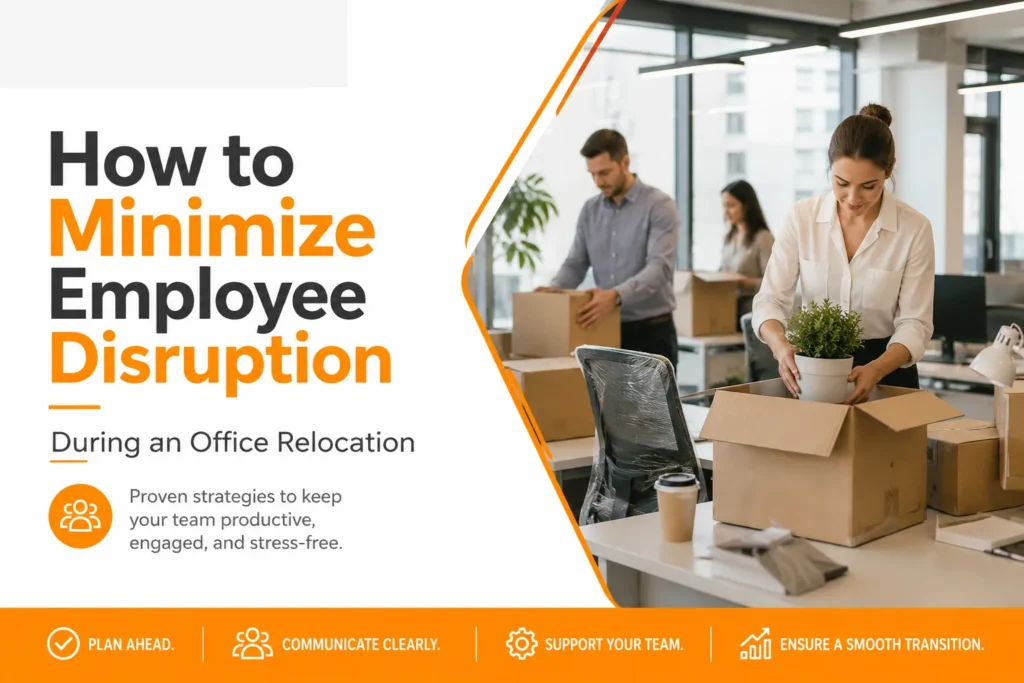
Minimizing employee disruption during relocation is one of the biggest concerns companies face during a commercial move. A poorly organized office relocation can interrupt workflow, lower morale, delay projects, and reduce customer satisfaction. Employees often struggle with uncertainty, changing routines, and temporary operational delays when businesses relocate to a new office space. Without proper planning, even a small move can create expensive productivity losses.
The good news is that businesses can reduce workplace disruption by following a structured relocation process that prioritizes communication, organization, and operational continuity. Companies across California are increasingly investing in professional relocation services because expert movers help create a smooth transition while supporting staff throughout the move. Businesses preparing for an office move can also review this helpful guide on business moving tips for additional planning support.
Why Office Relocations Create Workplace Disruption
An office move affects nearly every part of daily business operations. Employees may deal with schedule changes, commuting concerns, unfamiliar layouts, and interruptions to their normal workflow. The impact of relocation on employees often includes stress, communication gaps, and confusion about responsibilities during the transition. Without clear office move instructions for employees, departments can quickly lose coordination and efficiency.
Another common issue is the lack of detailed move coordination. Businesses that attempt to manage everything internally often underestimate the complexity involved in disconnecting equipment, packing departments, updating IT systems, and maintaining customer service during the relocation. According to the Occupational Safety and Health Administration ergonomics guidance, poor lifting practices and rushed packing can also increase workplace injuries during moves.
Creating a Detailed Relocation Strategy Before Moving Day
The most effective way to minimize disruptions is by developing a structured relocation timeline several months before the actual move. Businesses should identify critical operational areas, establish deadlines, assign responsibilities, and prepare backup plans for potential delays. Creating a detailed relocation calendar helps departments stay organized while reducing confusion throughout the transition.
Professional movers often recommend phased moving plans for companies that cannot afford operational downtime. Instead of moving everything at once, businesses can relocate teams gradually while keeping essential departments active. Companies planning a large move should also review this practical office cubicle guide to better organize workstation transitions and reduce workflow interruptions.
Important Planning Priorities
Businesses should focus on IT preparation, employee scheduling, vendor communication, equipment inventory, and access management before the move begins. Clear timelines reduce confusion while improving accountability across departments. A strong relocation plan also supports maintain productivity goals during the busiest stages of the move.
How Effective Communication Reduces Employee Stress
One of the biggest mistakes companies make during managing employee relocation is failing to communicate consistently with staff. Employees want transparency about timelines, workspace changes, parking availability, commuting expectations, and operational adjustments. Frequent updates help reduce uncertainty while encouraging employee cooperation throughout the relocation process.
Strong effective communication also allows managers to address concerns before they become major problems. Team meetings, relocation checklists, internal announcements, and FAQ documents can help employees feel more prepared and involved. Businesses relocating in Southern California can benefit from reviewing this office relocation guide for additional insights into minimizing delays during commercial moves.
Supporting Employees During the Transition
The relocation of employees involves more than moving furniture and equipment. Workers often experience emotional and logistical stress during an office transition. Longer commutes, parking concerns, childcare adjustments, and changes in work routines can negatively affect morale if businesses fail to provide support during the move.
Companies that offer practical assistance often experience better employee retention and smoother transitions. Some organizations provide temporary remote work options, transportation support, flexible scheduling, or limited relocation benefits during the adjustment period. Research published by Penn State Extension also highlights how structured planning and communication reduce stress during major life transitions, including workplace moves.
Why DIY Office Moves Often Fail
Many businesses attempt to reduce costs by assigning relocation responsibilities to internal employees. Unfortunately, DIY commercial moves frequently create operational delays, damaged equipment, and scheduling conflicts. Employees already managing daily workloads rarely have the time or experience required for large-scale office relocation logistics.
Professional commercial movers provide trained crews, specialized equipment, packing systems, and coordinated transportation services that businesses cannot easily replicate internally. Experienced movers also help with minimizing downtime by organizing department-by-department transitions. Companies evaluating service providers may find this moving company guide useful before selecting a relocation partner.
Managing Technology and Equipment During an Office Move
Technology interruptions are one of the fastest ways to create severe workplace disruption. Businesses depend on internet systems, phone lines, cloud access, servers, and employee workstations to maintain operations. Without careful planning, disconnected systems can delay projects, disrupt communication, and negatively affect customer service.
Professional movers work closely with IT teams to coordinate equipment labeling, staged packing, cable organization, and workstation setup. Businesses should also test internet connections and server access before employees arrive at the new location. According to the Environmental Protection Agency waste management guidance, companies should also properly recycle outdated electronics and packing materials during office relocations.
Regional Considerations for California Office Relocations
Businesses planning minimizing employee disruption during relocation California projects must account for regional traffic patterns, building regulations, parking restrictions, and loading access. Office moves in dense areas often require permits, elevator scheduling, and carefully timed transportation logistics to avoid delays.
Companies handling minimizing employee disruption during relocation Los Angeles, minimizing employee disruption during relocation Pasadena, minimizing employee disruption during relocation Ontario, minimizing employee disruption during relocation Tarzana, and minimizing employee disruption during relocation Santa Monica often face additional coordination challenges because of heavy traffic and limited commercial loading zones. Professional local movers understand these regional challenges and help businesses avoid expensive scheduling problems.
Signs Professional Service Is Needed
Many companies wait too long before hiring professional movers. Businesses should strongly consider expert relocation services when relocating large departments, sensitive equipment, multiple floors, or specialized furniture. Complex commercial moves usually require advanced scheduling, experienced crews, and coordinated logistics that internal teams cannot manage effectively alone.
Warning signs include unrealistic timelines, limited staffing, IT concerns, employee confusion, or lack of clear moving plans. Businesses handling oversized inventory, confidential files, or specialty equipment benefit greatly from hiring a full service commercial mover. Professional support becomes especially important when companies must continue serving customers during the move.
- Departments cannot stop daily operations
- Large IT systems require careful coordination
- Heavy furniture or equipment needs special handling
- Management lacks commercial moving experience
- There is concern about productivity loss
- Employees are already overwhelmed with work responsibilities
Why Choose Eagle Star Moving
Commercial relocations require experience, organization, and strong operational planning. Businesses need movers who understand scheduling priorities, employee coordination, and the importance of protecting productivity throughout the move. Professional relocation teams help companies create a smooth transition while minimizing delays and operational interruptions.
Eagle Star Moving provides commercial moving support tailored to businesses throughout California. From detailed move coordination to careful equipment handling and structured scheduling, the company helps organizations reduce downtime during complex office moves. Businesses looking for reliable commercial support can explore commercial movers, request a free estimate, or learn more about available moving services.
Frequently Asked Questions
How can businesses reduce workplace disruption during an office relocation?
Businesses can reduce workplace disruption by creating organized timelines, assigning department responsibilities, maintaining strong communication, and hiring experienced commercial movers. Early planning helps reduce downtime while improving employee coordination during the move.
What is the biggest impact of relocation on employees?
The impact of relocation on employees often includes stress, commuting concerns, workflow interruptions, and uncertainty about changing work environments. Clear communication and structured scheduling help employees adapt more comfortably.
Why is managing employee relocation important?
Managing employee relocation properly helps businesses maintain productivity, improve morale, and reduce operational delays. Employees who feel informed and supported are more likely to remain engaged during the transition process.
What should office move instructions for employees include?
Office move instructions for employees should explain timelines, packing procedures, workstation labeling, technology preparation, parking details, and updated workplace expectations. Clear instructions reduce confusion and improve organization.
Why do companies hire professional office relocation services?
Professional relocation services help businesses avoid scheduling issues, equipment damage, and workflow interruptions. Experienced movers provide organized packing, transportation, setup coordination, and operational planning support.
How do companies minimize employee disruption during relocation in Los Angeles?
Minimizing employee disruption during relocation Los Angeles requires careful scheduling because of traffic, parking restrictions, and building access limitations. Experienced local commercial movers help businesses manage these challenges more effectively.
What relocation benefits help employees during office moves?
Some businesses offer flexible schedules, remote work options, transportation support, or temporary relocation packages to help employees adjust during office transitions and reduce workplace stress.
Conclusion
Minimizing employee disruption during relocation requires far more than simply transporting office furniture from one building to another. Successful office moves depend on detailed planning, employee communication, organized scheduling, and experienced logistical support. Businesses that attempt to rush the process often experience unnecessary downtime, productivity loss, and operational confusion.
Working with experienced commercial movers allows companies to focus on employees, customers, and daily operations while professionals manage the relocation itself. Eagle Star Moving helps businesses throughout California handle commercial relocations with organized planning, reliable scheduling, and efficient execution. Companies preparing for an upcoming office move can contact the team today to discuss scheduling, planning, and relocation support options.