Skip to content


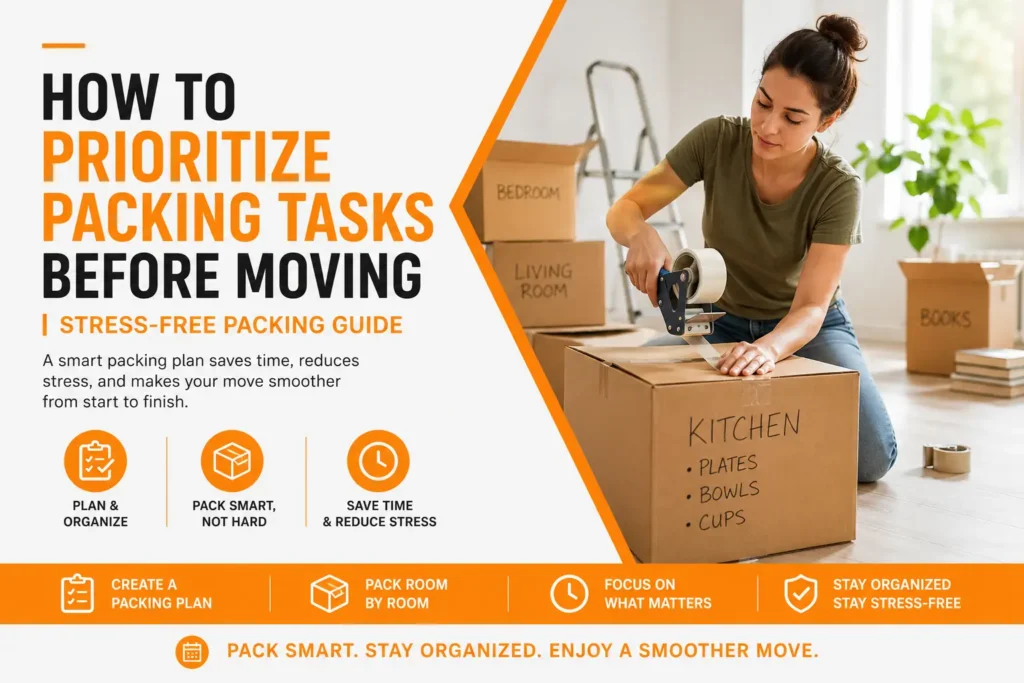
If you are wondering how to prioritize packing tasks before moving, the key is creating a realistic plan, focusing on low-use belongings first, and leaving daily necessities until the end. Many people underestimate the packing process and quickly become overwhelmed by clutter, misplaced belongings, and last-minute stress. A structured approach helps you save time, protect valuable possessions, and make moving day much easier.
Whether you are relocating across town or preparing for a long-distance move, understanding where to start packing when moving can prevent costly mistakes. By following a strategic timeline and using the right moving boxes, labels, and organization methods, you can stay organized from start to finish while ensuring your belongings arrive safely.
Create a Moving Packing Plan Before Packing Anything
Before filling a single box, create a detailed moving packing list that outlines every room, category of belongings, and packing deadline. A written plan gives structure to your move and prevents important items from being forgotten. Many homeowners find it helpful to review a comprehensive moving checklist before getting started. Planning early also helps determine how many sturdy boxes, labels, and packing supplies you will need.
The best moving and packing checklist includes room priorities, inventory tracking, utility arrangements, and transportation planning. Allocate specific days for different tasks so you do not end up rushing during the final week. When you know exactly what needs to be packed and when, the entire relocation becomes far more manageable.
Declutter Before You Start Packing
Packing items you no longer use wastes valuable time, space, and money. Before boxing belongings, sort everything into keep, donate, sell, recycle, and discard categories. This step reduces the number of boxes required and lowers overall moving expenses. It also gives you an opportunity to simplify your new home and avoid transporting unnecessary clutter.
Focus on storage areas, closets, garages, and spare spaces first. Old paperwork, unused electronics, worn furniture, and forgotten household items often accumulate over time. Eliminating excess belongings before the time to pack arrives makes the packing phase significantly easier and more efficient.
The Best Order of Packing for a Move
Understanding the proper order of packing for a move helps maintain household functionality while preparing for relocation. Begin with items used least frequently and gradually work toward daily essentials. Most families start with holiday decorations, seasonal storage items, collectibles, and decorative pieces that are not required before moving day.
After rarely used possessions are packed, move to secondary living areas such as the guest room, storage spaces, and formal areas. This systematic approach prevents disruption to everyday routines and allows your household to continue functioning normally until the final stages of the move.
Recommended Packing Sequence
Pack storage areas first, followed by seasonal belongings, decorative items, guest rooms, bookshelves, extra linens, dining room items, office equipment, bedrooms, bathrooms, kitchens, and finally daily necessities. Following this sequence creates a smooth and organized workflow.
Pack Room by Room Instead of Randomly
A successful relocation depends on packing room by room rather than mixing belongings from multiple spaces. Each box should contain items from only one area and include detailed labels. This method simplifies unpacking and allows movers to place boxes in the correct locations immediately upon arrival.
Room-based packing also reduces confusion when searching for important belongings during the transition. Keep inventory sheets for each room and number every box. Proper labeling makes it easier to identify contents without opening multiple containers and saves considerable time after the move.
Start with Seasonal and Rarely Used Items
Many people ask how do I start packing to move without disrupting daily life. The answer is simple: begin with belongings you rarely use. Season clothes, sports equipment, holiday decorations, spare bedding, collectibles, and archived documents can often be packed weeks before relocation.
Starting with nonessential possessions creates visible progress while preserving access to daily necessities. It also helps identify supply shortages early enough to purchase additional materials before deadlines become critical. Early packing reduces pressure during the final days before relocation.
Handle Fragile Items with Extra Care
Fragile items require specialized packing methods and should never be rushed. Glassware, artwork, antiques, mirrors, electronics, and delicate décor need protective wrapping materials and appropriately sized boxes. Using quality packing supplies reduces the likelihood of damage during loading, transportation, and unloading.
For valuable possessions, professional assistance may be the safest option. Homeowners transporting artwork or collectibles often benefit from specialized handling services. You can learn more about protecting delicate belongings through resources such as fragile items relocation guidance.
Pack the Dining Room and Kitchen Strategically
The dining room and kitchen typically contain some of the most challenging household belongings. Dishes, glassware, cookware, and appliances vary significantly in size and fragility. Begin with specialty serving pieces and rarely used kitchen equipment before moving to everyday necessities.
Keep frequently used utensils, basic cookware, and essential dishes accessible until the final few days. Organizing kitchen items by category reduces unpacking time and minimizes the chance of breakage. Proper cushioning and careful box weight management are especially important in these areas.
Prepare an Essentials Box for Moving Day
One of the most overlooked parts of any moving packing guide is preparing a dedicated essentials box. This container should include medications, chargers, important documents, toiletries, snacks, pet supplies, basic tools, and other items required immediately upon arrival.
Include necessities such as toilet paper, phone chargers, cleaning products, fresh clothes, and basic kitchen supplies. Keeping these belongings separate prevents frustration and eliminates the need to search through multiple boxes during the first night in your new home.
What to Pack Last When Moving
Many homeowners wonder what to pack last when moving. The final boxes should contain items needed for daily living until departure. This typically includes toiletries, medications, bedding, frequently used electronics, important paperwork, and basic cooking supplies.
Leave essential cleaning materials, phone chargers, work equipment, and children’s necessities unpacked until the final day. Having easy access to these belongings ensures comfort and convenience throughout the relocation process and prevents unnecessary stress during the transition.
When DIY Packing Starts Becoming a Problem
DIY packing works well for small relocations, but challenges increase rapidly as household size grows. Large furniture, specialty collections, fragile valuables, and tight timelines can create risks that inexperienced movers often underestimate. Improper lifting techniques and poor packing methods frequently result in injuries or damaged belongings.
If your move involves high-value possessions, extensive inventories, or significant scheduling constraints, professional support may save both time and money. Reading about choosing movers can help determine whether expert assistance is the right solution for your situation.
Professional moving standards are also supported through industry best practices published by the American Moving & Storage Association.
Signs Professional Service Is Needed
Several warning signs indicate it may be time to hire professionals. These include limited packing time, large homes, specialty items, physical limitations, complex logistics, or long-distance relocations. A qualified moving company can streamline the process and reduce relocation risks.
- Large amounts of furniture and household goods
- Valuable artwork and antiques
- Pianos or oversized specialty items
- Business or office relocations
- Short moving timelines
- Limited help from family or friends
- Long-distance transportation needs
Professional movers also provide packing expertise, transportation planning, and equipment that many homeowners do not have access to during a DIY move.
Why Choose Eagle Star Moving
A successful move requires more than simply loading boxes onto a moving truck. Professional relocation teams understand logistics, packing techniques, scheduling, and transportation requirements that help minimize disruptions. Services such as full packing service solutions can significantly reduce workload while protecting valuable belongings.
Eagle Star Moving helps homeowners simplify relocations through experienced packing crews, organized moving strategies, and customer-focused support. Whether you need local moving assistance, specialty item handling, or complete packing services, working with professionals can make the transition smoother, safer, and far less stressful.
Trusted Resources for Better Moving Preparation
Home preparation and organization play an important role in successful moves. The U.S. Environmental Protection Agency provides useful household organization and waste reduction guidance through this EPA resource. Proper disposal and recycling can reduce clutter before packing begins.
For inventory and home organization strategies, educational resources such as University of Minnesota Extension guidance offer practical planning recommendations.
Frequently Asked Questions
How do I start packing to move?
Start by creating a detailed inventory, gathering packing supplies, and decluttering unnecessary belongings. Pack rarely used items first and work room by room while maintaining a clear schedule for each packing phase.
Where to start packing when moving?
Begin in storage areas, spare rooms, and closets. Seasonal belongings, decorations, and infrequently used household items should be packed before daily essentials that you still need access to.
What is the best moving packing list?
A complete moving packing list includes room inventories, packing supplies, utility transfers, moving dates, transportation arrangements, essential item tracking, and final moving day responsibilities.
What should I pack last when moving?
Pack toiletries, medications, important documents, chargers, bedding, work materials, and basic kitchen necessities last. These items are commonly needed until the moment you leave your home.
What is the correct order of packing for a move?
The recommended order starts with storage spaces, seasonal belongings, guest rooms, decorations, books, extra linens, dining areas, bedrooms, bathrooms, kitchens, and finally daily essentials.
Can professional movers help with packing?
Yes. Professional movers can provide full or partial packing services, specialized materials, labeling systems, and expert handling techniques that reduce damage risks and save considerable time.
Ready for a More Organized Move?
Knowing how to prioritize packing tasks before moving can transform a stressful relocation into a manageable project. By following a structured timeline, using a detailed packing for a move checklist, and focusing on the proper order of packing for a move, you can stay organized and avoid common moving mistakes.
If your move involves valuable belongings, limited time, or complex logistics, consider contacting Eagle Star Moving to discuss professional packing and relocation services. Schedule a consultation and take the next step toward a smoother move.