Skip to content


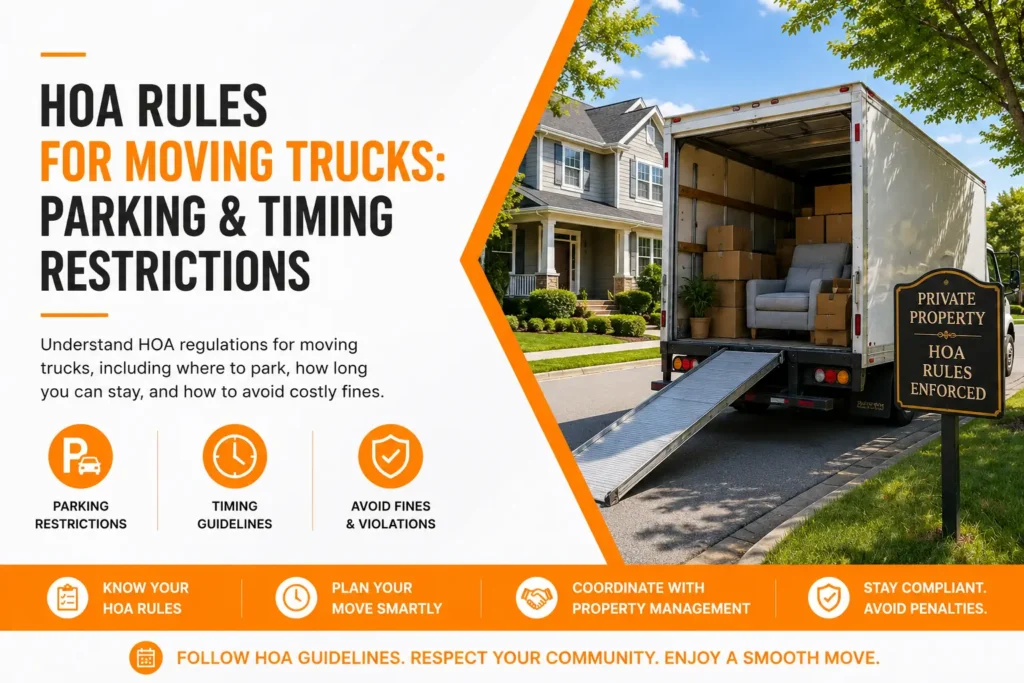
Understanding HOA rules for moving trucks parking and timing restrictions is one of the most important parts of planning a smooth relocation. Many homeowners focus on packing, scheduling movers, and changing addresses, but overlook the regulations established by their homeowners association. These rules can affect where moving trucks can park, how long they can remain on-site, and what permits may be required before moving day. Failing to follow HOA requirements can result in a parking violation, delays, fines, or disputes with neighbors.
Whether you are moving into or out of a condominium, townhouse community, or planned residential development, understanding local HOA requirements helps prevent unnecessary complications. In many hoa communities, parking restrictions are tied to community safety, traffic flow, and preservation of common areas. This guide explains how hoa parking rules work, what California homeowners should know, and how to prepare for a successful move while staying compliant.
Why HOA Moving Truck Rules Exist
Most homeowners associations create parking policies to protect residents, maintain accessibility, and reduce congestion throughout the neighborhood. Large moving vehicles can block streets, driveways, emergency access routes, and designated parking areas. For this reason, many associations include moving truck restrictions within their governing documents, CC&Rs, and community regulations.
Before scheduling your move, it is wise to review your HOA policies and compare them with your moving timeline. If you are still planning your relocation, reviewing a moving checklist can help identify HOA-related requirements early. Understanding restrictions in advance reduces the risk of last-minute scheduling problems and keeps your move organized from start to finish.
- Protects emergency vehicle access
- Prevents traffic congestion
- Reduces damage to roads and landscaping
- Maintains community appearance
- Improves safety for residents and visitors
Understanding HOA Parking Rules in California
HOA parking rules in California are often governed by both association policies and state regulations. Many communities operate under the Davis Stirling Act and portions of the Common Interest Development Act, which establish legal frameworks for community governance. While each association may adopt unique parking policies, those rules generally must remain consistent with applicable California law.
Homeowners should remember that a California HOA cannot simply create arbitrary restrictions without proper authority. Rules must be adopted through established procedures and communicated to residents. Associations often discuss parking changes during board meetings, allowing homeowners opportunities to review and comment on proposed amendments before implementation.
How California HOA Laws Affect Parking Policies
California HOA laws typically allow associations to regulate parking in private streets and community-owned spaces. However, public streets may fall under municipal authority rather than HOA control. This distinction is important because moving truck regulations may vary significantly depending on whether the vehicle is parked on private HOA property or a city-managed roadway.
Common Moving Truck Parking Restrictions Found in HOA Communities
Most associations regulate where moving trucks can stop and how long they may remain parked. Restrictions often depend on street width, community layout, and accessibility concerns. Larger trucks frequently require advance approval because they occupy substantial space and may interfere with normal traffic patterns.
If your move involves a larger vehicle, reviewing truck requirements early is essential. Homeowners can benefit from understanding vehicle sizing through resources like moving truck size guide. Selecting the appropriate truck can help satisfy HOA requirements while minimizing disruptions to neighbors and community operations.
- Restrictions on overnight parking
- Limits on truck size and weight
- Designated loading zones
- Reserved parking permit requirements
- Maximum parking durations
- Restrictions near fire lanes
- Protection of landscaping and sidewalks
Parking Permits and HOA Approval Requirements
Many associations require residents to obtain parking permits before moving day. The approval process helps management coordinate vehicle access and prevent conflicts with other residents. Some communities request permit applications several days or even weeks before the scheduled move date.
Obtaining approval early can prevent costly delays. In some cases, associations may require proof of insurance, moving company information, vehicle dimensions, or certificates of compliance. These requirements are especially common in high-density developments where space is limited and vehicle movement must be carefully managed.
Documents Often Required by HOA Boards
Depending on the association, residents may need to submit moving schedules, contractor information, insurance certificates, vehicle details, and security deposits. Reviewing HOA documentation before scheduling movers helps ensure every requirement is satisfied before moving day arrives.
Timing Restrictions for Moving Trucks
One of the most overlooked aspects of HOA rules for moving trucks parking and timing restrictions involves approved moving hours. Many associations limit moving activity to specific windows during weekdays and weekends. These restrictions are intended to reduce noise, preserve community peace, and minimize disruptions to residents.
Timing requirements can vary considerably among communities. Some allow moves only during business hours, while others prohibit moving activities on holidays altogether. Reviewing HOA guidelines alongside resources such as best times to move can help homeowners choose dates that align with both HOA regulations and moving company availability.
- Weekday-only moving schedules
- Restricted holiday access
- Limited weekend moving hours
- Noise-related restrictions
- Elevator reservation requirements
- Loading dock scheduling rules
HOA Parking Enforcement and Violation Consequences
HOA parking enforcement is typically handled through warning notices, citations, towing policies, or monetary penalties. Associations often enforce parking rules consistently because failure to do so can create liability concerns and complaints from residents. Understanding enforcement procedures helps homeowners avoid preventable issues during relocation.
A single parking violation may not seem significant, but repeated violations can escalate quickly. Associations may issue fines, suspend privileges, or require reimbursement for damages caused to community property. Professional planning and compliance with HOA procedures help eliminate many of these risks before moving day begins.
Common HOA Enforcement Methods
Enforcement often includes written notices, photographic documentation, violation hearings, towing authorization, and fine assessments. Homeowners should carefully review association policies to understand how disputes are handled and what appeal options may be available if a violation occurs.
Special Considerations for Parking 18 Wheeler Moving Trucks
The issue of parking 18 wheeler trucks is particularly important in many residential communities. Large commercial vehicles can create visibility hazards, block intersections, damage pavement, and interfere with pedestrian traffic. As a result, numerous HOAs prohibit or severely restrict oversized moving vehicles within community boundaries.
If a long-distance relocation requires a tractor-trailer, homeowners may need to arrange shuttle services using smaller trucks. Professional movers often use this approach when direct access is limited. Planning ahead reduces logistical complications and helps ensure compliance with HOA requirements while maintaining moving efficiency.
- Street width limitations
- Weight restrictions
- Gate clearance concerns
- Fire lane access requirements
- Community road protection policies
Common HOA Parking Solutions for Homeowners
Finding an effective hoa parking solution begins with communication. Many moving-related issues arise because residents wait until the last minute to review community requirements. Contacting management early allows sufficient time to obtain approvals, secure permits, and reserve designated loading areas before moving day arrives.
Associations often appreciate proactive residents who communicate their plans clearly. Early coordination makes it easier to accommodate moving vehicles without affecting neighboring properties or community operations. This approach benefits homeowners, management teams, and fellow residents alike.
- Reserve loading zones early
- Request temporary parking permits
- Schedule moves during approved hours
- Use appropriately sized trucks
- Coordinate with management staff
- Notify nearby neighbors when necessary
Why DIY Moving Often Creates HOA Compliance Problems
Many homeowners underestimate how complex HOA-regulated moves can become. While a do-it-yourself move may appear cost-effective initially, it often creates compliance risks when residents are unfamiliar with association procedures. Missing permit requirements, using oversized vehicles, or parking in restricted areas can quickly lead to violations and unexpected expenses.
Professional movers understand how to navigate access restrictions, loading requirements, and community regulations. They also help coordinate truck placement, scheduling, and logistics that many homeowners overlook. In communities with strict parking policies, professional planning often prevents problems before they occur.
DIY Mistakes That Commonly Trigger Parking Violations
Common mistakes include parking in fire lanes, blocking driveways, exceeding approved time limits, using prohibited vehicle types, and failing to secure required permits. These errors can result in fines, towing expenses, delays, and disputes with HOA management.
Signs Professional Moving Service Is Needed
Certain situations make professional assistance particularly valuable. If your community enforces strict hoa parking regulations, requires extensive documentation, or limits access to certain vehicle types, experienced movers can help simplify compliance and reduce stress. Professional coordination becomes even more important when timelines are tight or property access is restricted.
Complex moves involving apartments, gated communities, elevators, long carrying distances, or specialty items frequently benefit from professional planning. Homeowners who attempt to manage these challenges alone often encounter avoidable delays that increase both costs and frustration.
- Strict HOA approval requirements
- Limited truck parking availability
- Oversized or specialty items
- Multi-story buildings with elevators
- Gated community access restrictions
- Large family relocations
- Time-sensitive moving schedules
What HOA Boards Consider When Approving Moving Requests
Most HOA board members evaluate moving requests based on safety, accessibility, community impact, and property protection. Their goal is generally not to prevent moves but to ensure moving activities do not disrupt residents or damage shared facilities. Understanding these priorities can help homeowners submit stronger approval requests.
Associations frequently assess vehicle size, moving duration, parking locations, and potential impacts on common areas. When homeowners provide complete information early, approval processes often proceed more efficiently and with fewer complications.
Understanding Governing Documents Before Moving Day
Your HOA’s governing documents remain the most important source of information regarding moving truck restrictions. These documents typically outline parking regulations, vehicle limitations, permit requirements, and enforcement procedures. Reviewing them well before moving day helps avoid surprises that could delay your relocation.
In California, many associations operate under legal frameworks established by the Davis Stirling Act. Homeowners seeking additional information about community governance may review educational resources provided by the Davis-Stirling.com reference library. Understanding applicable regulations can help residents better navigate HOA requirements.
How Safety and Community Planning Influence HOA Regulations
Many parking restrictions exist because large vehicles can affect visibility, emergency response access, and pedestrian safety. Research from the U.S. Environmental Protection Agency highlights the importance of community design and safe transportation planning in residential environments. HOA parking regulations often support these broader safety objectives.
Community planning experts also recognize that transportation access and neighborhood design significantly influence residential quality of life. Educational materials from the University of South Florida Center for Urban Transportation Research discuss transportation management concepts that align with many residential parking policies. These considerations help explain why associations often enforce parking standards consistently.
Why Choose Eagle Star Moving
Moving within an HOA-regulated community requires more than transportation. It requires planning, communication, scheduling expertise, and a thorough understanding of access requirements. Professional movers who understand community restrictions can help homeowners avoid delays, parking conflicts, and compliance issues that frequently occur during self-managed relocations.
Whether moving into a condominium, townhouse, gated neighborhood, or planned residential development, experienced relocation professionals help coordinate logistics from start to finish. Proper planning minimizes disruption, protects community property, and ensures moving activities remain aligned with HOA requirements while keeping your relocation on schedule.
Frequently Asked Questions About HOA Parking Rules and Moving Trucks
What are the most common HOA parking rules in California?
HOA parking rules in California commonly regulate visitor parking, commercial vehicles, overnight parking, vehicle storage, and moving truck access. Many associations also establish permit requirements and parking duration limits. Homeowners should always review their governing documents because rules vary from one community to another.
Can an HOA enforce parking restrictions on moving trucks?
Yes. HOA parking enforcement typically allows associations to regulate moving truck access on private roads and community-owned parking areas. Enforcement methods may include warnings, fines, towing procedures, or temporary restrictions when residents fail to comply with established community regulations.
What is the best HOA parking solution before moving day?
An effective hoa parking solution involves contacting management early, obtaining required permits, reserving loading areas, and confirming approved moving hours. Early coordination helps prevent parking conflicts, delays, and violations while making the moving process significantly smoother for everyone involved.
How does California law affect HOA parking regulations?
California law, including portions of the Common Interest Development Act and the Davis Stirling Act, establishes legal standards that many associations must follow. HOA rules generally need to be reasonable, properly adopted, and consistently enforced throughout the community.
Can an HOA prohibit parking an 18 wheeler in the community?
In many cases, yes. Restrictions regarding parking 18 wheeler vehicles are common because oversized trucks can create safety concerns, obstruct traffic, damage roads, and interfere with emergency vehicle access. Many communities either prohibit or strictly limit large commercial vehicle parking.
What should homeowners do if they receive a parking violation?
If you receive a parking violation, review the notice carefully and compare it with your HOA’s governing documents. Contact management promptly to discuss the situation and determine whether corrective action or an appeal process is available under community procedures.
Do HOA regulations differ between Los Angeles, Pasadena, and Ontario?
Yes. Although many communities operate under similar legal frameworks, individual associations establish their own rules. Requirements related to permits, moving schedules, vehicle size restrictions, and approved parking locations can vary significantly between neighborhoods and cities.
Schedule a Stress-Free HOA-Compliant Move
Moving within an HOA community requires careful planning, proper documentation, and compliance with parking and timing requirements. A well-organized relocation reduces the risk of delays, fines, vehicle access issues, and unnecessary stress. Whether you are moving into a condominium, townhouse, apartment complex, or gated neighborhood, understanding HOA requirements before moving day can make a significant difference.
If your upcoming relocation involves community parking restrictions, limited access, permit requirements, or complex scheduling logistics, professional moving assistance can help streamline the process. Working with experienced movers allows homeowners to focus on settling into their new property while the relocation details are handled efficiently. Contact us today to discuss your move, request a quote, or schedule your relocation with confidence.
Conclusion
Understanding HOA rules for moving trucks parking and timing restrictions is essential for avoiding costly delays, parking disputes, and compliance issues during a relocation. From reviewing hoa regulations california and obtaining parking permits to understanding hoa parking law requirements and scheduling approved moving times, preparation plays a critical role in a successful move. Communities throughout Los Angeles, Pasadena, Ontario, Tarzana, and Santa Monica often have unique requirements that homeowners must follow.
By reviewing governing documents early, coordinating with management, and seeking professional guidance when necessary, homeowners can significantly reduce moving-day complications. For residents seeking a smoother relocation experience while remaining compliant with community requirements, Eagle Star Moving can help coordinate the process from planning through final delivery. Contact the team today to schedule your move or request additional information.