Skip to content


Moving household items is already stressful, but handling hazardous liquids adds another layer of responsibility. Understanding how to move cleaning chemicals safely is essential to avoid spills, toxic reactions, and health risks during relocation. Whether you are handling everyday cleaning supplies for moving or stronger chemical products, proper planning ensures chemical transportation safety and protects both people and property during transit.
This guide explains safe packing techniques, transportation rules, and professional insights used by movers and even lab personnel who follow strict hazardous material transport standards. You will also learn when DIY approaches fail and why professional help from Eagle Star Moving is often the safest solution for long-distance or complex moves involving chemical transportation.
Understanding Risks When Moving Cleaning Chemicals
Many homeowners underestimate the dangers involved in chemicals transportation. Even small spills from household cleaners can create toxic fumes, damage belongings, or trigger reactions when mixed incorrectly. Products like bleach, ammonia, and drain cleaners fall under dangerous goods classifications when transported in bulk or combined improperly. This is why understanding chemical transportation safety is critical before packing anything for relocation.
From a logistics perspective, improper handling can violate department of transportation guidelines for hazardous materials. Movers must consider ventilation, temperature changes, and secure packaging during transit. Even small mistakes in material shipping can lead to emergency situations requiring emergency response. Proper planning ensures ensuring safe transport of all household chemicals without putting anyone at risk during relocation.
Types of Cleaning Chemicals and Their Hazards
Not all cleaning products behave the same during transport. Some are corrosive, others are flammable, and some release harmful gases when exposed to heat or pressure. Understanding these categories helps in planning chemicals relocation safely. Products such as disinfectants, bleach, and oven cleaners require careful separation and packaging using protective materials like plastic wrap and sealed plastic bag layers.
Even common household items like vinegar and baking soda can create chemical reactions if improperly mixed during transit. This is why professionals in hazardous material transport always isolate reactive substances. Following proper safe handling procedures ensures that cleaning supplies remain stable throughout long-distance moves and prevents accidental exposure during loading, unloading, or storage periods.
How to Pack Cleaning Supplies for Moving
Proper packing your cleaning supplies is the most important step in preventing spills and contamination. Always start by checking expiration dates and disposing of unnecessary chemical products. Use sealed containers, double-layer plastic bag protection, and secure lids tightly. Adding absorbent materials like paper towels or packing paper helps contain leaks if containers shift during transportation.
When preparing how to pack cleaning supplies for moving, separate liquids from powders and never mix different chemical categories. Place items upright in a sturdy box and label them clearly for safe handling. Professional movers often use specialized containers designed for material shipping safety standards to ensure stability during long-distance travel and reduce the risk of accidental chemical exposure.
Safe Packing Checklist for Cleaning Chemicals
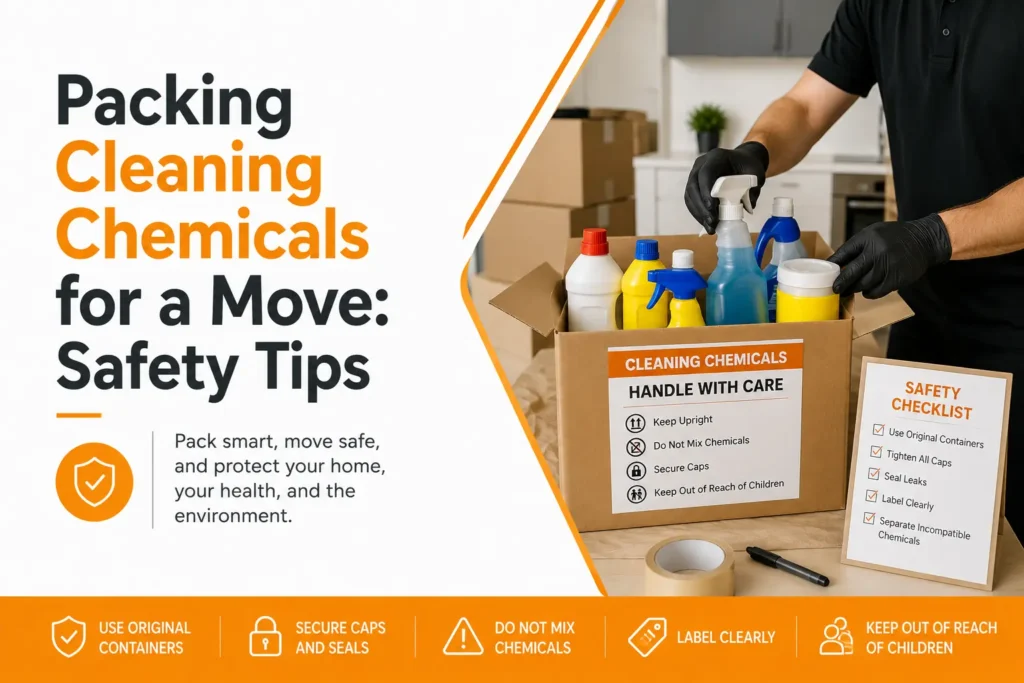
Use these essential steps when preparing cleaning chemicals for transport. Always wear gloves, ensure ventilation, and keep incompatible substances separated. This process is widely used in both household and industrial chemicals transportation environments where strict health and safety standards are required for all handling procedures.
- Seal all containers tightly before packing
- Use double plastic wrap protection for liquids
- Keep chemicals upright in sturdy boxes
- Separate acids and bleach-based cleaners
- Label all boxes clearly for hazardous materials
Safe Transportation Guidelines for Chemical Products
Transporting household cleaners requires careful planning similar to regulated hazardous material transport. Vehicles must be well-ventilated, and chemicals should be secured to prevent tipping or leakage. Temperature control is also important because heat can trigger reactions in certain chemical products. These precautions reduce risks during both short and long-distance relocation.
Professional movers follow strict protocols similar to those used by lab personnel handling sensitive substances. They understand chemical transportation safety regulations and ensure that all items remain stable throughout transit. Following guidelines from the EPA hazardous waste safety guide helps ensure compliance with environmental and safety laws during transport.
Common Mistakes When Moving Cleaning Chemicals
One of the biggest mistakes people make is mixing different cleaning supplies in a single box. This increases the risk of chemical reactions, leaks, and contamination. Another common issue is failing to secure lids properly, which can lead to spills during transportation. Many DIY movers also ignore temperature sensitivity, which is critical for safe chemicals transportation.
Another frequent error is using weak packaging materials instead of proper packing paper and sealed containers. Without proper containment, even small vibrations during travel can cause damage. According to MIT Environmental Health & Safety guidelines, improper chemical handling increases exposure risks significantly, especially during relocation or long-distance transport scenarios.
Signs Professional Service Is Needed
If you are moving large quantities of chemical products or industrial-grade cleaners, professional help becomes essential. DIY packing is risky when dealing with corrosive or flammable substances. Situations involving mixed chemicals, bulk containers, or uncertain labeling require expert handling to ensure chemical transportation safety throughout the entire moving process.
You should also consider professional movers if your relocation involves long-distance travel or storage. Companies specializing in hazardous materials understand compliance requirements and safety protocols that protect both property and people. According to the American Red Cross hazardous materials guide, improper handling increases emergency risks during transport and storage significantly.
- Multiple chemical categories in one move
- Strong corrosive or flammable cleaners
- Long-distance or interstate relocation
- Lack of proper packaging materials
Why Choose Eagle Star Moving
Choosing a professional team like Eagle Star Moving ensures your relocation is handled with precision and safety. Their trained crew understands chemical transportation safety protocols and applies structured handling methods to reduce risk. They also follow best practices in safe handling and secure loading for all types of household and commercial items.
Unlike standard movers, Eagle Star Moving integrates safety-first logistics for sensitive items, including cleaning supplies for moving and other hazardous materials. Their experience in chemicals relocation ensures compliance with safety regulations while protecting your belongings. You can also explore services like full packing service and moving FAQ for additional guidance.
FAQs About Moving Cleaning Chemicals Safely
What is the safest way to handle chemical transport during a move?
The safest approach is to isolate each product, use sealed containers, and follow proper chemical transportation safety guidelines. Always avoid mixing substances and use protective materials like padding and plastic wrapping for stability.
Can moving companies transport cleaning chemicals?
Some moving companies can handle limited household cleaners, but most avoid large-scale hazardous material transport. Professional movers like Eagle Star Moving follow strict rules to ensure compliance and safety during relocation.
How should cleaning supplies for moving be packed?
Use sealed containers, double-layer plastic bags, and absorbent materials. Proper how to pack cleaning supplies for moving techniques reduce leaks and ensure stability during transportation and handling.
What makes chemical transportation safety so important?
It prevents toxic exposure, spills, and dangerous reactions. Safe chemicals transportation protects people, property, and the environment, especially during long-distance or multi-day moves.
Are cleaning chemicals considered hazardous materials?
Yes, many chemical products fall under hazardous materials when transported. Items like bleach and ammonia require careful handling under safety guidelines to prevent risk during relocation.
When should I hire professionals for chemical relocation?
If you are moving large quantities, mixed chemicals, or long distances, professional help is essential. Experts ensure proper chemicals relocation with reduced risk of spills or exposure.
What happens if chemicals are packed incorrectly?
Incorrect packing can cause leaks, toxic fumes, and contamination of other belongings. It may also create safety hazards requiring emergency response during transit or unloading.
Final Moving Safety Guidance and CTA
Understanding how to move cleaning chemicals safely is not just about packing boxes. It is about protecting health, ensuring compliance, and preventing accidents during relocation. With proper safe handling, correct materials, and awareness of hazardous materials, you can significantly reduce risks associated with transporting household cleaners.
If your move involves complex or sensitive items, working with professionals ensures everything is handled correctly from start to finish. For safe, reliable, and structured relocation support, reach out to Eagle Star Moving to schedule your move and get expert guidance tailored to your needs.