Skip to content


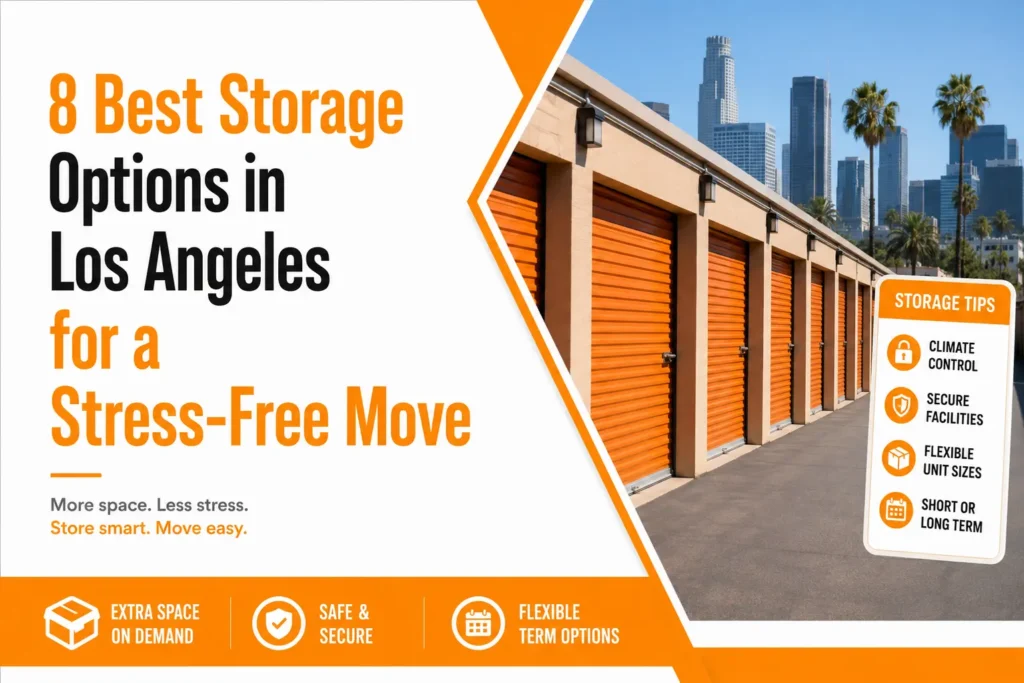
Finding the right storage units in Los Angeles can feel overwhelming — but for high-value belongings and long-distance moves, full-service vaulted storage sits at the top of the hierarchy. This premium option is the gold standard for movers who can’t afford damaged furniture or scratched antiques.
How it works:
- Pack into sealed wooden vaults. Professional warehouse teams load your belongings into individual sealed wooden crates — purpose-built containers that shield items from dust, pests, and moisture far more effectively than open-bay alternatives.
- Label and catalog each vault. Every crate is inventoried on intake, giving you a clear record of what’s stored and where.
- Store untouched until delivery. This is the defining advantage: one-time handling. Your items go in once and come out once — at your new address. According to industry experts, full-service companies use this vaulted system specifically to minimize handling risks.
- Receive at your door. The vault travels to you, not the other way around. No return trips, no renting a truck.
Pro Tip: Wooden vaults stack vertically in the warehouse, maximizing cubic footage — meaning providers can often store more at lower per-item cost than sprawling open units.
Contrast this with traditional self-storage: open bays accumulate dust, require multiple handling trips, and put the labor burden entirely on you. For long-term or high-value storage needs, vaulted facilities remove nearly every friction point.
If protecting furniture or fine belongings is a priority, vaulted storage is the one option worth budgeting for first — before exploring anything else.
2. Climate-Controlled Units for LA Microclimates
Los Angeles isn’t one climate — it’s dozens. Coastal neighborhoods like Santa Monica sit in near-constant marine layer humidity, while the San Fernando Valley regularly bakes past 100°F in summer. When choosing self storage Los Angeles, ignoring these microclimates is a costly mistake. As industry experts notes, climate-controlled storage is non-negotiable for protecting wood furniture, electronics, and fine art from extreme temperature fluctuations.
Why it matters: Heat warps solid wood, causes electronics to degrade faster, and accelerates adhesive failure in antiques. Humidity — especially coastal damp — breeds mold inside upholstered pieces and paper-based items within days. A non-regulated unit may seem fine short-term, but experts warn against storing sensitive belongings in uncontrolled environments for any period longer than 48 hours.
Items that specifically require climate-controlled units:
- Fine art, oil paintings, and photography prints
- Pianos and stringed instruments
- Antique furniture and heirloom textiles
- Consumer electronics and hard drives
- Mattresses and memory foam (see how to protect bedding during a move)
- Vinyl records, books, and archival documents
- Wine and temperature-sensitive collectibles
If any item on this list is going into storage, a climate-controlled unit isn’t optional — it’s the baseline.
For those preferring hands-on access to their belongings, the next option — portable storage containers — offers a completely different approach worth understanding.
3. Portable Storage Containers for On-Site Access
Portable storage containers for moving appeal to anyone who needs flexibility without committing to a fixed timeline. The pack-at-your-own-pace model lets you load belongings over days or weeks — a genuine advantage during phased home renovations or slow, overlap-heavy relocations. Once packed, the container is either picked up and transported or left on-site until you’re ready.
That convenience has real trade-offs in Los Angeles, however. Dense neighborhoods — think Silver Lake, Echo Park, or West Hollywood — often have narrow streets, limited driveway depth, and strict HOA or permit requirements that complicate container placement. Coordinating a drop-off window in high-traffic areas can add unexpected delays and fees.
Security is another consideration worth weighing carefully. A container sitting in your driveway is more exposed than items locked inside a monitored warehouse facility. Standard container locks offer basic protection, but they don’t replicate the controlled access and surveillance systems found in dedicated storage buildings.
For office managers overseeing phased floor renovations, portable containers provide an efficient staging solution — furniture moves out in waves without a full building relocation. You can explore more planning strategies on the our blog.
Choose portable containers when flexibility of schedule outweighs the need for maximum security — but always verify local placement permits first.
| Feature | Portable Container | Vaulted Storage |
|---|---|---|
| Packing schedule | Flexible | Scheduled pickup |
| Security level | Moderate | High |
| Urban placement | Challenging | No placement needed |
| Best for | Renovations, slow moves | Long-distance, high-value items |
4. Traditional Self-Storage Facilities
Traditional self-storage facilities remain one of the most recognizable options in the moving and storage Los Angeles market — and for good reason. 24/7 access is a genuine advantage when you need to retrieve seasonal gear or business inventory on your own schedule. However, convenience comes with real trade-offs worth examining before you sign a lease.
Cost is the first hard reality. According to industry reports, a standard 10×10 climate-controlled unit in the LA metro averages over $200 per month — among the highest self-storage rates in the country. That expense compounds quickly during extended moves or renovation timelines.
⚠️ Cost Warning: A three-month rental of a 10×10 unit in LA can easily run $600–$700+ before factoring in any move-in fees, insurance requirements, or rate increases.
Hidden labor costs add another layer. Unlike portable containers delivered to your door, traditional facilities require you to load, transport, and stack items yourself — or hire separate help. That’s a real expense many renters overlook upfront.
Security is also worth scrutinizing. High-traffic public facilities mean more unfamiliar access, increasing exposure to theft or damage from other renters. Units with shared hallways or older lock systems offer less protection than specialized options.
Before committing to a traditional unit, calculate the full cost — including your time and labor — against what a managed solution might actually deliver.
5. Professional Packing and Storage Integration
Most items don’t fail in storage because of the facility — they fail because of poor preparation. Improper wrapping, unstable stacking, and mismatched box weights all create damage before a single door closes. Choosing movers who pack specifically for storage closes that gap.
Packing: Professionals use acid-free paper, stretch wrap, and double-wall boxes rated for long-term compression. Standard moving wrap is designed for transit — storage-grade materials account for months of pressure, humidity shifts, and temperature variance inside even climate controlled storage Los Angeles facilities.
Crating: Fragile and high-value items — pianos, sculptures, large canvases — require custom wooden crates built to the item’s exact dimensions. We offer professional packing and crating to ensure a seamless transition into secure storage, including specialized handling for instruments and fine art that standard boxes simply can’t protect.
Loading: How items enter a storage unit determines whether they survive it. Professionals load heaviest items first, distribute weight evenly, and leave airflow channels between stacks — a discipline that casual packers rarely apply.
Temperature-sensitive belongings like a wine collection also benefit from this integrated approach; proper packing paired with stable conditions prevents irreversible damage during any gap between moves.
The safest storage starts long before the unit door opens — invest in professional packing that’s built for the long haul.
6. Inventory-Managed Commercial Storage
When a business relocates or downsizes its headquarters, the stakes are far higher than a residential move. Inventory-managed commercial storage addresses that complexity directly — making it one of the most specialized storage services Los Angeles businesses should know about.
Key assets businesses typically store include:
- Office furniture — desks, ergonomic chairs, conference tables
- IT equipment — servers, monitors, networking hardware
- Physical archives — contracts, HR records, compliance documents
Detailed inventory logs are the backbone of this service. Every item is tagged, catalogued, and tracked, so nothing gets lost during a phased office transition. For companies managing sensitive equipment or confidential records, that accountability isn’t optional — it’s essential.
The standout feature of this tier is white-glove delivery: items are transported from the storage facility directly to the new office, placed exactly where they’re needed. No scrambling, no mystery boxes.
“We had 40 workstations to store during our HQ renovation. Knowing every piece was logged and retrievable on demand was a game-changer.”
Providers like We serve both residential and commercial clients across California, offering the kind of structured, accountable storage a business relocation demands.
Before booking any commercial storage, confirm the provider maintains item-level inventory records — not just unit-level tracking.
7. What to Avoid: Items Movers Won’t Store
Not every item belongs in a storage unit — and knowing that distinction before move day can save you serious headaches. Professional movers maintain strict guidelines about what they will and won’t store, and ignoring those rules puts your belongings, the facility, and other customers’ property at risk.
Prohibited items typically include:
- Flammables and hazardous materials — propane tanks, paint cans, gasoline, cleaning solvents
- Perishable food — anything that will spoil, attract pests, or produce odors
- Living things — plants and animals are never permitted
- Ammunition and firearms (without proper licensing documentation)
- Illegal substances of any kind
Beyond prohibited categories, high-value documents and jewelry should never leave your hands. Passports, medical records, financial files, and irreplaceable items belong in a personal safe or on your person — not a storage vault. If you’re working with secure storage services near Manhattan Beach or anywhere across LA, a trustworthy provider will tell you this upfront.
Red flag to watch for: Any mover who claims they can store anything without restrictions is likely cutting corners on compliance — and that should give you pause.
Move-Day Essentials checklist — keep these out of any unit:
- Medications and medical devices
- Phone chargers and personal electronics
- Important IDs and legal documents
- Cash and valuables
- Keys to your new home
Before handing anything off to a mover, audit your load against this checklist — what stays with you is just as important as what goes into storage.
Key Takeaways for Your Los Angeles Move
Choosing the right storage solution can make or break a Los Angeles relocation. Whether you’re bridging a gap between leases in Encino or staging a corporate move in Agoura Hills, the decisions you make about storage directly affect your budget, your belongings, and your stress levels.
- Vaulted storage beats self-storage for moves. Professionally managed vault storage is typically safer and more cost-effective than renting a standalone unit — your items stay organized, handled less, and inventoried throughout.
- Climate control isn’t optional in Southern California. Heat, humidity, and the occasional Santa Ana wind condition make temperature-regulated units essential for furniture, electronics, and anything with adhesives or finishes.
- Professional packing is your best insurance. Damage in storage almost always traces back to improper packing — not the facility itself. Investing in professional packing upfront eliminates the most common point of failure.
- Accountability lives with one provider. When a single company manages both the move and the storage, there’s no finger-pointing if something goes wrong. Eagle Star Moving specializes in exactly this — stress-free relocation backed by secure, monitored storage solutions under one roof.
Start by confirming climate control and vault availability before you book — those two factors alone will narrow your options to the providers worth trusting.
Frequently Asked Questions
How much do storage units in Los Angeles cost?
On average, a 10×10 climate-controlled unit in the LA metro area costs between $200 and $350 per month. Prices vary significantly by neighborhood, with Westside and Santa Monica locations commanding the highest premiums due to demand.
Is climate-controlled storage necessary for LA moves?
Yes. Because of LA’s microclimates—ranging from coastal humidity to Valley heat—climate controlled storage Los Angeles is essential for any items sensitive to warping or mold, such as wood furniture, electronics, and vinyl records.
What is the safest moving and storage option in Los Angeles?
For maximum security, full-service vaulted storage is the gold standard. Unlike self-storage with public hallways, vaulted storage keeps your items in sealed crates within a monitored warehouse that is not open to the general public.
Can I store my car in a standard storage unit?
Generally, no. Most standard moving and storage Los Angeles facilities require a dedicated vehicle unit with specific fire safety protocols and proof of insurance/registration. Always check with your provider before attempting to store motorized vehicles.
Conclusion: Choosing the Right Fit
The best storage option depends entirely on your priority: choose vaulted storage for high-value protection, portable containers for a flexible timeline, or traditional units for frequent access. By matching your storage choice to your specific LA neighborhood and item sensitivity, you can ensure a truly stress-free move.