Skip to content


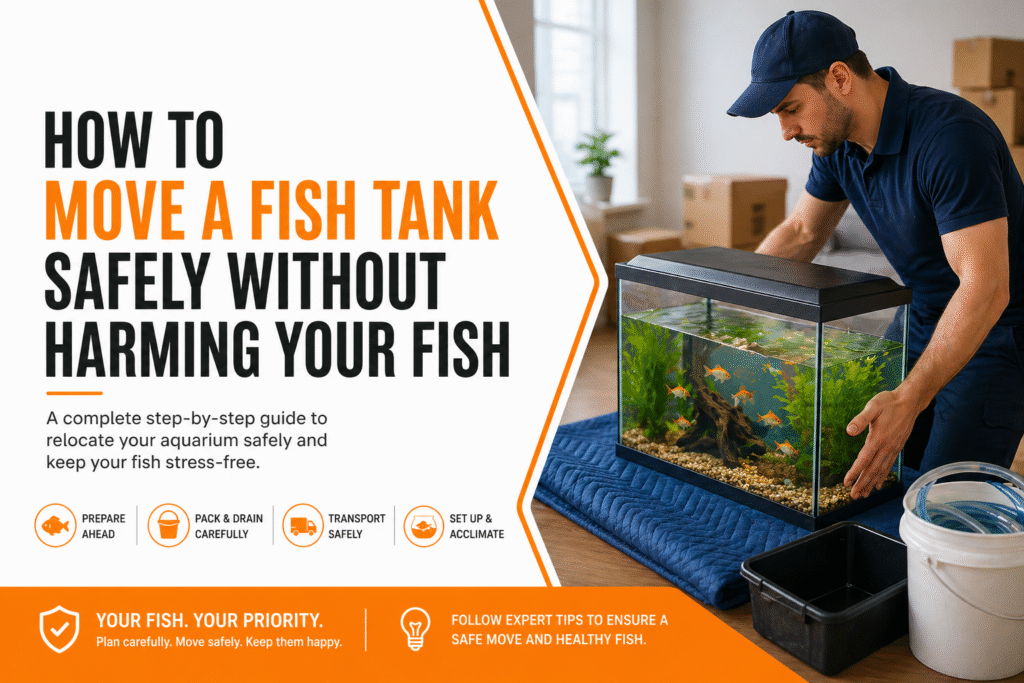
Moving a fish tank is one of the most delicate tasks during relocation. If you are searching for how to move a fish tank safely, you already know it is not as simple as lifting and placing it in a truck. Your fish rely on a stable ecosystem that includes tank water, beneficial bacteria, and controlled temperature. Any disruption can harm or even kill your aquatic pets. This guide breaks everything down clearly so you can protect your investment, your fish, and your peace of mind.
Why Moving a Fish Tank Is Riskier Than You Think
Many people underestimate the complexity of moving aquarium systems. A tank is not just glass and water. It is a balanced environment where fish and plants depend on bacteria, filtration, and temperature stability. When you drain water or disturb substrate, you risk losing that balance. That is why DIY attempts at how to move aquarium setups often lead to stress, disease, or fish loss.
If you are planning a larger move, understanding logistics becomes even more important. Many people refer to a moving checklist but overlook specialized items like aquariums. The truth is, transporting fragile ecosystems requires planning similar to moving high-value items. Without the right approach, even a short-distance move can turn into a costly mistake.
Step-by-Step Process for How to Move a Fish Tank Safely
Prepare Your Fish Before Moving
Start by stopping feeding your fish 24 hours before the move. This reduces waste buildup in transport containers. Prepare a bag filled with original tank water and place fish inside. Secure the bag with a rubber band and ensure oxygen is sufficient. This step is essential for anyone learning how to move fish when moving house.
Preserve Beneficial Bacteria
Keep filter media wet to protect beneficial bacteria. Place it in a container with tank water. Losing this bacteria can crash your aquarium cycle. Many DIY movers ignore this step, which leads to ammonia spikes once the tank is reassembled.
Drain and Pack the Tank
Remove decorations and live plants carefully. Wrap fragile items in bubble wrapped material. Drain most of the tank but leave some water for substrate moisture. Never move a full tank, as the weight and pressure can crack the glass.
Transport Equipment Safely
Pack heaters pumps and filters separately. Use padding to avoid damage. If your move takes longer than a few hours, consider a battery operated air pump to maintain oxygen levels during transit.
Reassemble and Stabilize
Once you arrive, begin setting up your aquarium immediately. Refill with saved water and treat new water with a water conditioner. Gradually reintroduce fish to avoid shock. This final step determines whether your move succeeds or fails.
Common DIY Mistakes That Harm Fish During Moving
Many people attempting the best way to move a fish tank make critical mistakes. They rush the process, discard filter media, or expose fish to temperature swings. These errors disrupt the biological balance and stress aquatic life. Even something as simple as using untreated tap water can cause chemical shock.
Another issue is improper packing. Tanks that are not secured or bubble wrapped properly can crack during transit. If you are already dealing with other moving challenges, like those discussed in choose movers, adding aquarium risks can quickly overwhelm your move.
How to Transport Fish Tank Equipment Safely
Understanding how to transport a fish tank means treating every component separately. Filters, lighting, and heaters must be packed securely and kept dry unless needed for bacteria preservation. Fragile items should be labeled clearly and stored in stable positions to avoid impact damage.
Temperature control is equally important. According to the EPA guidance on aquatic ecosystems, sudden environmental changes can harm aquatic life quickly. This applies during transport as well. Insulated containers help maintain stable conditions, especially for longer moves.
When You Should Not Move a Fish Tank Yourself
There are situations where DIY is simply not worth the risk. Large tanks, saltwater systems, or setups with rare fish require expert handling. If your tank exceeds manageable weight or includes complex filtration systems, you should not attempt to move your fish alone.
Research from University of Illinois Veterinary Medicine shows that stress during transport is a leading cause of fish illness. If your move involves long distances or extreme temperatures, professional help becomes essential rather than optional.
Signs Professional Aquarium Moving Service Is Needed
- Large or custom-built tanks
- Saltwater or reef systems
- Long-distance relocation
- Valuable or sensitive fish species
- Limited time for proper setup
If you recognize any of these signs, relying on experts is the safest choice. Similar to moving delicate assets covered in high value items, aquariums demand precision and experience.
Why Choose Eagle Star Moving for Aquarium Relocation
Professional movers understand that aquariums are living systems, not just fragile objects. With specialized handling techniques, proper packing materials, and transport strategies, your fish and equipment stay protected throughout the move. Services like white glove moving ensure every detail is handled carefully.
Organizations like the Humane Society emphasize the importance of minimizing stress during fish relocation. Professional movers follow these principles, giving you peace of mind while avoiding costly mistakes that often happen with DIY moves.
FAQs About Moving Aquarium
How do I transport fish safely?
Use a bag filled with original tank water and secure it with a rubber band. Keep the bag insulated and avoid temperature fluctuations. For longer trips, use a battery operated air pump to maintain oxygen levels.
What is the best way to move a fish tank?
The best way to move a fish tank is to drain it, preserve beneficial bacteria, transport fish separately, and reassemble quickly. Avoid rushing the process and always use original tank water when possible.
Can I move a fish tank with water in it?
No, moving a full tank is dangerous. The weight can crack the glass and cause leaks. Always drain most of the tank water and transport it separately in sealed containers.
How long can fish stay in bags?
Fish can typically survive 6 to 12 hours in a sealed bag if oxygen is sufficient. For longer durations, use an air pump or oxygen tablets to maintain safe conditions.
Do I need to clean my tank after moving?
Avoid deep cleaning immediately after moving. You need to preserve beneficial bacteria. Only remove debris and maintain water quality using a water conditioner.
How do I move live plants safely?
Wrap live plants in damp paper towels and place them in sealed containers. Keep them moist but not submerged to prevent damage during transport.
Ready for a Safe and Stress-Free Move?
Moving an aquarium is not just another task on your checklist. It requires planning, care, and experience. If you want to avoid costly mistakes and protect your fish, it is worth considering professional help. You can get a quote and understand what your move really requires before taking risks.
Conclusion
If you truly want to master how to move a fish tank safely, you need more than basic instructions. You need the right timing, tools, and experience to protect your aquatic environment. While small tanks may be manageable, larger or complex setups often require professional handling. Eagle Star Moving provides the expertise needed to move your aquarium without unnecessary stress. Take the safer route and plan your move with care. When you are ready, schedule a consultation and make your aquarium relocation smooth and secure.